Showing posts with label JAPAN CUTS. Show all posts

Tuesday, July 1, 2014

JAPAN CUTS Genre Genetics: Diversifying the DNA of Japanese Film

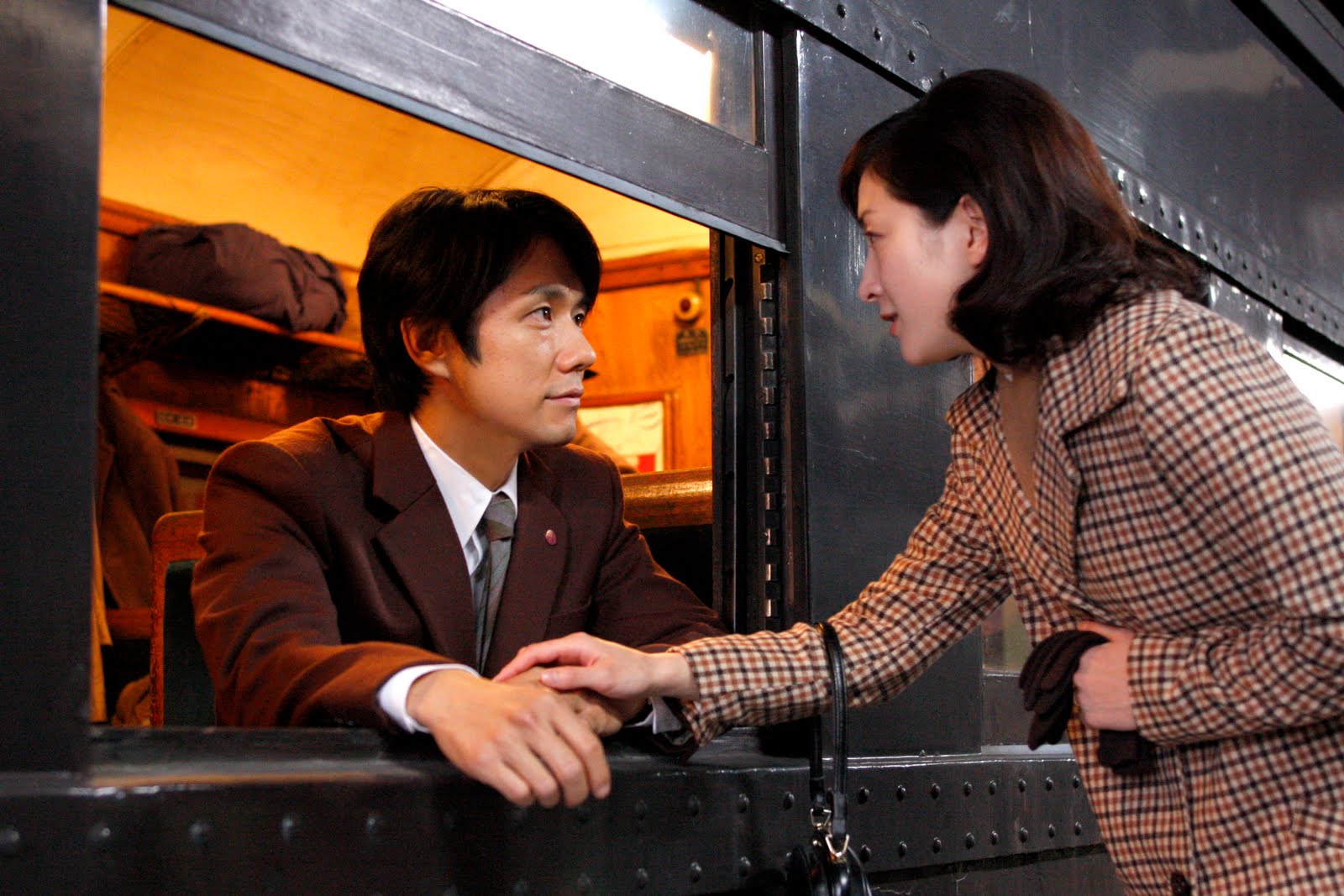
Snow White Murder Case © 2014 “Snow White Murder Case” Production Committee


“Film genre in Japan could, and often is, thought of in terms of the nation’s much discussed ‘Galápagos syndrome,’” said Joel Neville Anderson, curator for JAPAN CUTS 2014, which boasts an especially diverse selection of films, ranging from outré thrillers and comedies to dramas and documentaries reflecting social issues.

He's referring to the phenomenon where many Japanese products have been developing differently from the rest of the world due to Japan's geographical and cultural isolation, much like the unique wildlife of the Galápagos Islands.

The majority of Japanese film productions, said Anderson, evolved from pre-existing manga, novels, or plays. And even the original productions have a quality that many perceive to be distinctly Japanese – such as the peculiar, off-the-wall comedy, sophisticated sword fights, and raw, gut-churning thrillers and horror films.

However, there are some signs of change: international films have slowly but surely been influencing the Galapagosized Japanese films.

“While the industry may appear to develop and mature independently, there is and always has been considerable influence from and on foreign cinemas,” Anderson said.

Nowhere is this more evident than in the thriller/action films of JAPAN CUTS 2014, running July 10-20 at Japan Society.

Thriller/Action:

"This year foreign influence is especially evident in two impressive remakes, " said Anderson, "Hideo Nakata’s supernatural thriller Monsterz adapted from the Korean film Haunters, as well as Sang-il Lee’s Unforgiven, a samurai-Western adapted from Clint Eastwood’s acclaimed original." Another example is Man from Reno, a Japanese and American co-production of a gender-flipped, fresh look into film noir.

Monsterz (Jul 13) is a paranormal thriller involving a mind-bending man, and Shuichi, the only one mysteriously unaffected by this power. Unforgiven (Jul 15) is the remake of Clint Eastwood’s 1992 film, where the American West changes to Meiji-era Japan and a former samurai, after having sworn off his sword, goes on one more mission he can’t refuse. Man from Reno (Jul 19) is a Japanese-American film that reverses the gender roles of a typical thriller movie, with a female crime novelist visiting San Francisco becoming involved in a series of events after a night with a handsome stranger.

Other notable movies, all co-presented with action-thriller purveyors at the New York Asian Film Festival, include The Mole Song: Undercover Agent Reiji (Jul 10), about an undercover cop infiltrating a yakuza gang, The Snow White Murder Case (Jul 11) follows a mysterious murder which blows out of proportion from social media exposure. Miss Zombie (Jul 12) follows a zombie who works for a family and is exploited, and then have the tables turned against them. All-Round Appraiser Q: The Eyes of Mona Lisa (Jul 13) is reminiscent of a Dan Brown novel as it follows an appraiser and a magazine editor who must solve a mystery threat to steal the Mona Lisa.

Melodrama:

“Melodramatic form has recently received new forms of mass-spectatorship through the online streaming of television dramas from Japan, Korea, and greater East Asia; however melodramas were a cornerstone of the golden age of Japanese cinema in the postwar period,” Anderson said.

My Little Sweet Pea (Jul 19) follows an aspiring anime voice actor tracing her long-lost mother’s life as her mother suddenly returns to her life and leaves just as abruptly. Pecoross’ Mother and Her Days (Jul 20) show a heartwarming story of a middle-aged manga artist looking after his senile mother and looking back at her life. The Extreme Sukiyaki (Jul 16) is a slice of life movie with four aimless friends going on a trip to the beach with just a sukiyaki bowl.

“Films such as My Little Sweet Pea and Pecoross address new changes in contemporary society, such as divides in urban and rural life, youth aspirations in anime and the entertainment industry, divorce, as well as aging society and care for elders,” Anderson said.

Comedy:
Hello! Junichi © 2012 NICE RAINBOW/KATSUHITO ISHII


Even in the uniquely absurd brand of Japanese comedy films, the keyword appears to be “variety”. A notable comedic movie is Neko Samurai (sold out), where a lone samurai is assigned to assassinate a white cat, but fails and befriends it, causing him to be roped into a feud between cat lovers and dog lovers. 

“This year we celebrate the incredible versatility of international star Kazuki Kitamura, who goes from playing sinister to heroic to comical roles with seeming ease,” Anderson said, as he stars in the mystery thriller Man from Reno, the comedic Neko Samurai, as well as the festival’s surprise screening of the Indonesian-Japanese horror-thriller Killers.

Hello! Junichi (Jul 20) is a coming-of-age story of a third-grader and his friends who put on a concert with the help of their apprentice teacher. “Hello! Junichi is a fantastic mash-up of genre and influences, as director Katsuhito Ishii takes the humor of his previous films specifically for adult audiences Funky Forest: The First Contact and The Taste of Tea and perfectly adapts to a story that's incredibly fun for cinephiles of all ages.”

As for comedic films with an unusually dark or erotic twist, check out Maruyama, the Middle Schooler (Jul 11) following Maruyama, a sex-crazed boy who injures himself after attempting “self-fellatio”, and with a new neighbor in town and mysterious incidents, he reimagines his surroundings as a manga-like fantasy world. Greatful Dead (Jul 18), follows Nami, a woman who takes selfies next to dead, lonely elders, sent to a murderous rage after a lonely old man she was prizing finds a new life with Christian volunteers. The Passion (Jul 18) is about Frances-ko, a woman raised in a convent longing to know about love and sex, but after calling out a sign from above, finds a human-faced growth between her legs that constantly insulting her, and she tries to adapt to her new situation.

Check-out the full JAPAN CUTS 2014 lineup for more on these films, and even more genre favorites.

--Younjoo Sang

Monday, July 15, 2013

Choice Cuts: The Bleeding Heart And Soaring Soul Of JAPAN CUTS 2013

AKB48 spreading music and hope in Japan.

While JAPAN CUTS is known for action packed, manga-inspired and genre-twisting blockbusters, especially those co-presented with NYAFF, there is another side to the festival encompassing impacting films that pull at heartstrings with their depth and far reaching soulfulness.

As the New York Times wrote in a feature about the more emotionally harder-hitting films this year:
A well-made bummer can be a beautiful thing, and while many countries have distinguished histories in the genre, none currently outdo Japan when it comes to outdo Japan when it comes to malaise and depression.
One of the more quietly devastating films in the lineup is Japan’s Tragedy. Directed by Masahiro Kobayashi and sharing the concept of the 1953 work of art, A Japanese Tragedy, the film focuses on an elderly father (played by  legendary Akira Kurosawa actor Tatsuya Nakadai), who while pain stricken by the death of his wife must cope with terminal illness. His son, who suffered major losses in the 2011 Great East Japan Earthquake, remains lost emotionally and struggles to aid his father in recovery. Through his own affliction, the father tries to help his son one last time, deciding it best if he were allowed to die.

Shot mostly in black and white, the gravity of the themes and anguish of the characters are palpable and timely. In the tsunami that struck the northeastern Japan, some say “Japan’s elderly were hardest hit by the crisis” and even over two years later are displaced from their homes and not getting the care they need. When BAFICI first screened Japan’s Tragedy, they called the film “a profound analysis of the human condition and its unpredictable derivations” and noted that the titular tragedy is never pinpointed, stressing “the imprecision of that discomfort that afflicts Japan”. This silent yet pertinent theme is beautifully, painfully illuminated in Japan’s Tragedy.


Another powerful story is the documentary Live Your Dream: The Taylor Anderson Story. After being exposed to its language, culture, and history by her elementary school teacher, Taylor developed a love for Japan, ultimately taking part in the Japanese government’s Japan Exchange Teaching Programme (JET), which supports non-native Japanese to teach English in Japan. Tragically, Taylor is lost to the tsunami, but her life and legacy--shown through pictures, home videos, and heartwarming personal accounts within the film--offers a sense of hope that can only come by following one’s dreams.

Today the devastation from the tsunami can still be felt by the families of the 19,000 people dead or missing in Tohoku and the hundreds of thousands displaced, many still without permanent homes. Amidst slow recovery there are pleas to not forget those affected and still suffering. Live Your Dream shows us that even through loss, the memories we leave behind can never be forgotten.

For the JAPAN CUTS screening of Live Your Dream Taylor’s father and the documentary’s director will be on hand to introduce the film and take part in a Q&A it afterwards. Knowing many JET participants and hoping to apply for the program in the future, I see this film as a testament to Taylor and her family’s resilience. It’s a very moving portrayal and inspires people that despite everything one should never give up on their dreams.

Touching on similar themes, JAPAN CUTS presents the North American premiere of DOCUMENTARY OF AKB48: Show must go on. Japan’s pop music phenomenon AKB48, which boasts nearly 100 members, finds ways to give back to those in need in the months after 3/11. With some members hailing from Sendai (the largest city in the Tohoku region), the group tours the area and establishes the “A Project for Someone”, where they donate funds to the Tohoku region.

With three of JAPAN CUTS’ 24 feature films this year focusing on 3/11, it is evident the impact the devastation continues to have on Japan, from hardship to hope (related: Japan Society maintains regular updates of the recovery work funded by the Japan Earthquake Relief Fund). These films offer an opportunity to immerse oneself in the heartrending, often painful, but ultimately transforming stories that come from those experiencing and ultimately overcoming tragedy.

--Susan Berhane

Taylor Anderson and friend.

Images: (Top) DOCUMENTARY OF AKB48 No flower without rain © 2012 AKS Inc. / TOHO CO., LTD. / AKIMOTO YASUSHI, Inc. / North River Inc. / NHK Enterprises, Inc.  All Rights Reserved. (Bottom) Live Your Dream: The Taylor Anderson Story © 2012 Global Film Network All rights reserved.

Friday, June 28, 2013

JAPAN CUTS Cool With Hot-Hot Sellers

Helter Skelter hot, yes, but apparently this photo means nothing out of context.

With two weeks left before this year’s JAPAN CUTS film festival heats up midtown east July 11-21, there are already a handful of screenings close to selling out (spoiler alert: they probably will this weekend, so get tix now!) We asked the fest’s curator Samuel Jamier (who also co-curated the New York Asian Film Festival, which launched today), why these films are so hot.

“Of course the opening night screening of I'M FLASH! is not to be missed,” says Jamier. “Not only is it a hard, fast and fantastic gangster thriller, but festival fave director Toshiaki Toyoda will be on hand to talk about his latest UFO (Unidentified Film Objects, as I call his brand of cinema), and it is followed by one of our legendary Sapporo-sponsored after parties. The theme is bordello, and the dress is 'flashy'. Just no flashers, please.”

Helter Skelter (pictured above) is hot. “Like HOT hot,” says Jamier. “And it also contains one of the sexiest psychotic breakdowns captured on film.” The 'plastic surgery horror movie' follows a youth-obsessed, Gaga-esque pop star’s descent into hell. Apparently, a hot-hot hell.

Japan's number one box office hit of the year Rurouni Kenshin, getting its U.S. premiere screening as part of JAPAN CUTS and NYAFF, is based on manga that has sold 55 million copies and spawned several popular animated adaptations. “They couldn’t have missed if they tried,” says Jameir. “And boy didn’t they. Miss that is. It is pure manga sword-swinging bad-assery with girls in kimono. Period.”

Another near sellout is Yuichi Fukuda’s off-the-wall Hentai Kamen--a topsy-pervy twist (hentai basically means “pervert” or “perverted” in Japanese) to the superhero genre about a man who gains special powers when donning ladies underthings. The trailer alone received over 50,000 views in the first five days after it was uploaded to YouTube. When asked why, Jamier just shook his head baffled. “Because crotch jockeying action heroes is the genre we need?”

Here’s the trailer. Some might find it NSFW, but if that’s the case, you probably need to get a job somewhere with a sense of humor. Silly, earnest, epic. Enjoy!


Friday, July 27, 2012

JAPAN CUTS Goes Down With The 'Space Battleship'

Someone just found  out JAPAN CUTS is about to end. Image © 2011 Monkey Town Productions / Women on the Edge Production Committee.

As the sixth and largest ever JAPAN CUTS film festival heads into its final days, it presents arguably the quintessential range of new films from Japan. After tonight's sold-out screening of Leonie, a lyrical biopic about famed American sculptor Isamu Noguchi's mother, the festival concludes Saturday, July 28, with five films.

Lonely Swallows, receiving its U.S. Premiere, is a documentary following the "heartbreaking, devastating and hopeful" stories of Japanese-Brazilian kids living in Japan, and the complicated, often-ignored immigration issues that surround them.

Women on the Edge and A Gentle Rain Falls for Fukushima, both North American Premieres from the "Focus on Post 3.11 Cinema Series", are fictional narratives that use the Fukushima crisis as a backdrop, clarifying and commenting on the main stories. The former film was shot in director Masahiro Kobayashi’s family home in the disaster-stricken area and tells the story of three estranged sisters who gather for an unplanned reunion. The latter stars Kosuke Toyohara as an architect who runs away from his creditors and meets a host of quirky characters, including a young woman who claims that he is her son. Both films deal with unconventional interpersonal interactions and familial relationships.

In a previous article, festival curator Samuel Jamier commented on the emergence of "post-3/11 cinema" that encompasses not only documentaries but fictional films as well. Expanding on this he says, “Unlike what happened after the 9/11 terrorist attacks in the U.S., there was an immediate response in Japan from filmmakers to 3/11 disasters–to archive, to record, to deal with the trauma–interesting for a country in which distance, hindsight, caution, are so often emphasized. On top of that, major filmmakers (like Kobayashi with Women on the Edge and Yoshihiro Nakamura, whose Chips was featured earlier in the festival) took a 180 and remolded their narratives to 'accommodate' the story of 3/11. A few years from now (and this might also be true outside the film industry), there will likely be a pre- and post-3/11 era. I’m not sure if it’s a fracture or a new beginning, but it’s a major turning point."

The screening of Gentle Rain is preceded by the documentary short We Are All Radioactive. A few months after the quake, director Lisa Katayama filmed a group of surfer-turned-activists as they started to rebuild their coastal town of Motoyoshi. Katayama also gave cameras to a group of residents in town to shoot their own personal vignettes.

Also premiering in North America Saturday is Taichi Suzuki’s The Brat!, a uniquely dark comedy. Hiroki Konno plays Daisuke, a young documentarian who blames his unsuccessful career on his ugliness. He regains his sense of worth when he coaches a young actress named Momoko (Sayaka Toshiro), who is starring in a film by a more successful and better-looking rival. Suzuki’s off-kilter stylistic camerawork and Konno’s deadpan performance make for a subversively entertaining film.

"Overall, this year has been a tremendously fun and rewarding experience," says festival curator Samuel Jamier. "I think we found the right balance between big blockbuster titles and indies, and the final day of the festival reflects that equilibrium: on the one hand we have a bold, from-out-of-nowhere indie title like The Brat!, on the other hand the star-studded, multi-million sci-fi flick, Space Battleship Yamato."

The live action rendition of the classic TV anime Space Battleship Yamato has already sold out tomorrow's North American Premiere screening. Sporting a spectacularly huge budget of ¥2 billion, the movie was an enormous hit in Japan, even beating out Harry Potter and the Deathly Hallows at the box office. The storyline reads like a Japanese version of Battlestar Galactica, as the brave ship Yamato travels the galaxy looking for a planet that will save humanity from the evil alien Gamilons. Special effects and breathtaking action sequences abound in this audience-pleaser.

As the Yamato sets sail, JAPAN CUTS 2012, like all good things, must come to an end. Until next year… owari!


--Lyle Sylvander 
© 2010 "Space Battleship Yamato" Production Committee.

Friday, July 20, 2012

No American Comparison For Japan's Leading Living Actor

Koji Yakusho. Photo by Kazuto Suetake.

While our JAPAN CUTS roundup last week only touched on this weekend's mini-retrospective honoring living Japanese screen legend Koji Yakusho, today's New York Times carries an extensive critic's notebook by Mike Hale heralding the arrival of Yakusho to NYC:
Few people know more about movies, or have a more prominent place in the world of Japanese film, than Koji Yakusho... Regularly cited over the last 15 years as Japan’s leading actor… Mr. Yakusho’s name is not familiar in the United States, but many American filmgoers, whether they know it or not, have seen his long, wonderfully expressive face and his full head of floppy black (now graying) hair.
Born Koji Hashimoto in 1956, the former municipal government worker became interested in acting after seeing a production of Maxim Gorky’s The Lower Depths. In a nod to his previous career, he took the stage name Yakusho, which means “municipal ward office” in Japanese. After studying at the prestigious Mumeijyuku acting studio, he landed the role of historical figure Oda Nobunaga in the popular NHK series Tokugawa Ieyasu (1983). The role made him a household name in Japan and launched his career in television and film. While best known to foreign audiences for the Hollywood films Memoirs of a Geisha and Babel, his career spans an immense collection of dignified work.

Due to the sheer volume of titles (over 70 films in 33 years), Yakusho does not appear to have any contemporaries in the West. When considering similar U.S. leading men, the staff at Japan Society couldn't decide: DeNiro, Eastwood, Redford and Hanks all seemed to align themselves to various aspects of Yakusho's persona and career. In the end, there was just no comparison.

Even among his peers in Japan, Yakusho stands out for the range of quality films and television dramas. The latter half of the 1990s was his most audacious period and solidified his reputation as Japan’s premier actor. First came the feel-good hit Shall We Dance? (1996), which inspired a dance craze in Japan and a Richard Gere Hollywood remake. The film’s popularity no doubt stemmed from Yakusho’s performance as a worn-out salary man who finds renewed vigor and lust for life when he enrolls in a late night dance class.

Following that triumph, he starred in a drastically different role in Shohei Imamura’s Palm d’Or-winning The Eel (1997). Imamura, one of the maverick directors from the Japanese New Wave of the 1960s, cast Yakusho as a man on the path to redemption following the murder of his adulterous wife. He won a Japanese Academy Award for both performances. 1997 also marked the release of A Lost Paradise, based on the novel by Junichi Watanabe. It features Yakusho as a middle-aged man who has an affair with a woman twenty years younger, ending in tragedy. The film came in second to Hiyao Miyazaki’s Princess Mononoke at the Japanese box office and critics universally praised his performance. That year he also won the prestigious Hochi Film Award for Best Actor for Bounce Ko Gal, a topical film that dealt with high school prostitution. Yet again that year, Yakusho began his collaboration with Kiyoshi Kurosawa with Cure, in which he played an emotionally repressed detective searching for a deranged serial killer. Further films with Kurosawa include the horror-thrillers Charisma, Kairo (a.k.a. Pulse), and Doppleganger .
Koji Yakusho appears tonight at JAPAN CUTS' New York Premiere screening of his latest film The Woodsman and the Rain, followed by a Q&A session and reception. The actor also appears at the July 21 screening of his hit samurai film 13 Assassins. JAPAN CUTS also presents Yakusho’s Shall We Dance?, Chronicle of My Mother, and Cure.

Recently Yakusho directed and starred in the film Toad’s Oil, also screening at JAPAN CUTS a drama about a greedy day trader whose son has a serious accident that results in a coma. Faced with a challenge that cannot be solved by money, Yakusho’s character begins an exploration of emotions and challenges that are new to him. The film received enthusiastically positive reviews from critics and one wonders if the next stage of Yakusho’s career will emulate that of Clint Eastwood or his Japanese contemporary Takeshi Kitano. Considering his long list of accomplishments, it would not be surprising if this versatile actor became one of World Cinema’s preeminent director-performers as well.

--Lyle Sylvander


Thursday, July 12, 2012

JAPAN CUTS 2012: From Mainstream Mania And Genre Benders To A Post-3/11 Era

Join the Monsters Club that is JAPAN CUTS 2012. © 2011 GEEK PICTURES

“This year’s JAPAN CUTS festival is so varied in its programming that it’s anti-thematic”, says Samuel Jamier, Japan Society’s senior film programmer, and curator of the Society’s monster summer film festival, opening today in its sixth consecutive year.

The trailer for the festival says it all… by saying nothing and everything at once:


The shear diversity of 2012’s JAPAN CUTS films range from the decidedly popular Rebirth (winner of the Japanese Academy Prize for Picture of the Year) and uber-romcom Love Strikes!, to the grind(out)house Zombie Ass: Toilet of the Dead. Situated somewhere between these extremes is the “Focus on Post 3.11 Cinema” and “Anime from Hell”.

Jamier, who has curated three JAPAN CUTS festivals to date, notes “This year I have expanded the scope of the types of films we show. It is nice to have a reverential attitude towards the more serious films, but it is also good not to take yourself too seriously, and to always be on the lookout for something new and special. Previously, the only way to sample such a wide variety of genres and styles was to have actually lived in Japan. But I feel proud in bringing that variety to New York.”

A visit to the Japan Society between today and July 28 may indeed feel like a cinephilic trip to Japan as the 2012 installment of JAPAN CUTS is the largest ever presented with 39 films, 33 premieres 8 special guests, 3 award presentations and parties.

Something absolutely unique to the festival in the inclusion of documentaries and fictional films inspired by Japan’s March 11, 2011 earthquake and subsequent Sendai tsunami and Fukushima meltdown. With five features (Women on the Edge, Chips, A Gentle Rain Falls for Fukushima and No Man’s Zone) and a collection of shorts (We Are All Radioactive)--films all completed within a year of the disasters--it is surprising how such a wealth of quality work was created in such a short time span.

According to Jamier, “We now live in a post-3/11 era of creativity and there’s definitely a post-3/11 cinema happening .” He explains how during the tsunami tragedy, many amateur videographers shot footage of the disaster with their cameras and cell phones, creating their own documentation and narratives. The series of short documentaries We Are All Radioactive reflects this phenomenon. Filmmaker Lisa Katayama and her crew gave cameras to residents of Motoyoshi, a seaside town 100 miles north of Fukushima, to shoot the local scene after the disaster.

Jamier notes the post-3/11 era has also influenced films that don’t directly deal with the tragedy. “For instance, Yoshihiro Nakamura’s feature film Chips is ostensibly a comedy about a young man and his infatuation with a professional baseball player. But at the same time this comic story is being told, there is a weird ghostly space accommodating more serious subject matter. I attribute that to the influence of 3/11.”

Yakusho (l) in Woodsman. © 2011 Kitsutsuki to Ame Film Partners

At the center of the festival is the career of legendary actor Koji Yakusho, who will participate in a Q&A session and be presented with the first-ever Cut Above Award for Excellence in Film on July 21. Jamier says “I’m really excited and honored by the presence of Koji Yakusho, who is, in many ways, Japan’s leading actor.”

The festival features many of his classic films like Shall We Dance?, the director’s cut of 13 Assassins and Cure, as well as newer films like Chronicle of My Mother and The Woodsman and the Rain. “It’s amazing to see the consistent quality of his films through the years. By featuring Japan’s leading actor, we hope to demonstrate the importance of Japan Cuts in showcasing contemporary Japanese cinema,” says Jamier.

Other not-to-be-missed Q&A sessions include ones with Love Strikes! star Masami Nagasawa on July 14, Monsters Club director Toshiaki Toyoda on July 15, No Man’s Zone director Toshi Fujiwara on July 22, Roadside Fugitive SR director Yu Irie on July 22, and Leonie director Hisako Matsui on July 27.

The opening week party on July 14 will follow the sold-out screening of Love Strikes! and Q&A with Ms. Nagasawa, who won a Japanese Academy Award for her performance. The film, also screening July 22, was a blockbuster in Japan based on the enormously popular manga and television series of the same name (Moteki in Japanese). It follows the travails of a 31-year-old otaku who inexplicably experiences sudden popularity with women. Perhaps his goal of romance with the hip and kawaii Miyuki (Nagasawa) is attainable after all. The fun story is densely populated with pop songs, including a musical number performed by girl group Perfume, and visual teasers like scrolling Twitter messages and karaoke lyrics.

In a festival where Love Strikes! twice, it’s a bit overwhelming that there are 37 more possible hits. Luckily, several media outlets have produced their top choices from this year’s “cool slice of cinematic pie”, including the Wall Street Journal, Village Voice, and Twitch.

--Lyle Sylvander
Love Strikes! © 2011 TOHO CO.,LTD. / TV TOKYO CORPORATION / DENTSU INC. / KODANSHA Ltd. / Sony Music Entertainment (Japan) Inc. / Office Crescendo Inc. / PARCO CO., LTD. / Yahoo Japan Corporation / TV OSAKA CORPORATION / TV AICHI CORPORATION 
モテキ© 2011「モテキ」製作委員会 

Thursday, July 14, 2011

JAPAN CUTS 2011: Peeps & Parties

Can we get a what-what for our 1, 2, … 3 Points after party?

This year’s JAPAN CUTS film festival exceeded expectations opening weekend, selling out 7 of 10 screenings and hosting the wild Yakuza Weapon Party with appearances by co-directors Tak Sakaguchi and Yudai Yamaguchi.

Along with a multitude of screenings through July 22, there are several more special guests attending this year’s fest, including some of Japan’s top filmmakers and actors and actresses who take part in exclusive Q&A’s and post-screening parties.

Following the international premiere of ThreePoints on July 15, director Masashi Yamamoto and actress Sora Aoi will take part in a post-screening Q&A and and may stick around for the rockin' 1,2...3 Points after party.

Yamamoto’s career has spanned a period of almost three decades since his debut film Carnival in the Night (1983). Aoi is an internationally renowned celebrity whose roots in the Japanese AV industry propelled her career to pinku eiga then to television dramas, and finally to mainstream entertainment. She has even branched off into the music industry (namely pop). Her performance in ThreePoints can be seen as her branching into more dramatic and serious films

Following the North American premiere of The Seaside Motel on July 16, director Kentaro Moriya will take part in a Q&A session. Since Moriya began his career in music videos it is no surprise that his films reflect the same essence of flash and style that encapsulated his earlier career. The Seaside Motel stays true to this ideal as it fully embodies Moriya’s signature flair.

Also on the 16th, the international premiere of A Liar and a Broken Girl will host director and writer Natsuki Seta and actor Shota Sometan, who introduce the film and take part in a Q&A. The film is characteristic of Seta’s stylistic audacity as it boldly fuses teen romance with serial killer horror.

Directly prior to the New York premiere of Haru’s Journey on July 20, director and writer Masahiro Kobayashi will make a special statement paying homage to the victims of the recent earthquake in Japan (the film was shot in the Tohoku region prior to devastation by the 3/11 tsunami). The screening will be followed with a reception that includes the appearance of his regular co-producer (and wife) Naoko Kobayashi. Half of all ticket sales for this screening will go to the Japan Earthquake Relief Fund.

In addition to the 1, 2, … 3 Points after party, the festival will conclude with the festival concludes with the  JAPAN CUTS Loose Closing Night Party following the final film Into the White Night. Details will be announced next week, so stay tuned and hope to see you there!

--August Dinwiddie

Thursday, July 7, 2011

JAPAN CUTS Lands + Under-The-Radar Gems

© 2011 “Osamu Tezuka’s Buddha” production

Japan Society’s fifth consecutive JAPAN CUTS film festival (July 7-22) is the world’s largest festival of Japanese cinema, featuring 33 screenings, 32 films, 31 premieres and an array of special guests and exclusive parities.

Highlighting the wild diversity and extreme artistry of Japan’s newest movies and encompassing “the hard, rough, sharp, smooth and soft edges of today’s Japanese film scene,” the selection ranges from eye-popping blockbusters to jarring genre flicks to heart aching indies.

Samuel Jamier, Japan Society’s chief film programmer who curated the festival, said “a substantial number of titles this year can’t be easily categorized or confined to strict genre boundaries.” In a video interview (below), he also hoped the festival gives audiences “the most original and creative” examples of what’s coming out of Japan today.


As with years in the past, JAPAN CUTS 2011 includes several co-presentations with the New York Asian Film Festival, including the sold out July 7 opening film Osamu Tezuka’s Buddha: The Great Departure, an animated adaptation of Tezuka’s spectacular and philosophically deep manga of the Buddha (also screening July 10); the “almost impossible to define” Milocrorze: A Love Story July 10; and JAPAN CUTS’ first sell-out Gantz, a grindhouse adaptation of a popular Japanese manga that pits teenagers in trendy black leather costumes with advanced war gear against aliens hiding on Earth.

Opening weekend also contains some not-to-be-missed gems, such as Love & Loathing & Lulu & Ayano (July 8), an intricately plotted tale of an introverted, shy office worker who does part time in the porn industry. The noiseful Ringing in their Ears (July 7) revolves around a rock group competing with managers, obsessed groupies, shut-ins, single parents and kindergarten teachers as they prepare for a concert.

Firefox News’ Peter Gutiérrez, who has been writing about the festival since its inception in 2007, featured some of his favorite under-the-radar fare (including Sword of Desperation, A Night in Nude, Torso and Birthright), and Steve Dollar writing for The Wall Street Journal had this to say:
The series also offers less easily characterized films. The 4½-hour "Heaven's Story" marks a serious turn by director Takahisa Zeze (known as the "King of Pink" for his softcore sex comedies), who maps a sprawling revenge drama about a little girl who comes of age obsessed with the serial killings of her family. Sora Aoi, the AV idol (sex star) turned mainstream actress, stars in Masashi Yamamoto's "Three Points," an episodic drama that surveys the lower depths in three Japanese cities. Likewise, Kazuyoshi Kumakiri's "Sketches of Kaitan City" brings a realist eye to the working-class struggles described in the fiction of the late Yasushi Sato.
--August Dinwiddie

Note: JAPAN CUTS opens today. Tickets can be purchased online, through the box office at 212-715-1258, or in person at Japan Society. Members receive $3-$4 discounts, and if you purchase five tickets or more, you get $2 off each ticket (only for orders made by phone or in-person). Also, we’re testing out a new screen so enjoy the new view!
Gantz tix already gontz! © 2011 Gantz Film Partners

Tuesday, July 27, 2010

It’s A Wrap: JAPAN CUTS Concludes Its Biggest Year Yet!

Hidetoshi Nishijima (L) and Ryoko Hirouse (R) in Zero Focus

JAPAN CUTS 2010 screened its final film on July 16th and the numbers are in: over 5,500 tickets were sold, resulting in a record attendance in the four years Japan Society has produced the JAPAN CUTS film festival!

A number of films seem to have struck chords with audiences and critics alike. Twitch praised Parade’s “unsettling” tone and the “uniformly excellent” cast. Cinema Strikes Back loved  One Million Yen Girl, and thought that writer-director Yuki Tanada’s work “hit all the right notes.” The Village Voice found  Bare Essence of Life to be “unpredictable and occasionally astonishing.” Blogger J B Spins admired  Zero Focus’ “lush production” and praises it as “an emotionally complex thriller that holds together quite well.” This Week in New York called out Dear Doctor as a “warm, tenderhearted film.” In regards to Confessions , whose two screenings were both sold out, Reel Talk says  “Whatever the plot’s truth, of murder or revenge, Confessions crafts a chilling hundred-three minutes.”

A number of special events happened during JAPAN CUTS’ two-and-a-half weeks as well. Katie’s Japan Files reports from the Q&A with director Isao Yukisada and actor Tatsuya Fujiwara, after a screening of Parade. Cinema Knife Fight has a lengthy post from the Sushi Typhoon Party following the premiere of Mutant Girl’s Squad. In addition, Japan Society Film Program’s Tumblr has great wrap-ups of the films screened, with rare artwork and stills and insider photos from special events.


Kenichi Matsuyama in Bare Essence of Life

Samuel Jamier, chief film curator at Japan Society, predicts another big year for JAPAN CUTS in 2011. He wants to keep the focus on thoughtful, creative commercial films from innovative directors like Confessions’ Tetsuya Nakashima and One Million Yen Girl’s Yuki Tanada. Films based on original stories with strong scripts are a priority. He discusses in greater detail in a fantastic VCinema post-fest interview.

Female filmmakers will likely continue to make a strong showing. "There's definitely more visibility," Samuel told The Walls Street Journal about 2010's lineup, "and even when there isn't a female director, a lot of these films focus on dominant female roles." This year JAPAN CUTS showed new films from Tanada, Miwa Nishikawa (Dear Doctor) and Satoko Yokohama (Bare Essence of Life). These directors’ films have a fresh perspective on their respective genres and showcase the emergent and indelible power and skill of women making movies in Japan today.

One trend that does not seem to be happening in Japan, however, is 3D. Of course, in the U.S. we’re all about the 3D, but in Japan, the only major 3D film over the next year will be a digital re-release of the 2000 Tatsuya Fujiwara starrer Battle Royale.

Whatever the future of Japanese Cinema holds, one thing is certain. You will catch the best of it next year at JAPAN CUTS 2011!

N.O.

Thursday, July 15, 2010

Get Chopping With Those Chopsticks: It’s Restaurant Week!


Great news, food-lovers: Restaurant Week is here. Hundreds of the best restaurants in NYC serving a variety of cuisines extend affordable prix-fixe options through July 25!

Asia Society put together a drool-worthy list of Asian and Asian-Fusion Restaurants. If it's Japanese food you’ve got an appetite for, there are 15 participating restaurants all over the city. We especially recommend Matsuri, whose executive chef, Tadashi Ono, participated in Japan Society’s Hot Pots to Warm the Soul workshop last December, and Megu, whose chefs have also participated in past workshops. Morimoto, the restaurant spearheaded by Iron Chef (and one-time Japan Society panel participant) Masaharu Morimoto, has tasty bento boxes on the menu. And in addition, Nobu chef Nobu Matsuhisa who received the Japan Society Award last year for his contribution to U.S.-Japan relations, always serves up a tasty feast.

EN is always worth a visit, with master mixologist Gen Yamamoto (who participated in our Shochu tasting event last February) and taste-tacular tofu. SushiSamba 7 is a Japanese-Latin fusion joint, which has especially funky cocktails and worldwide notoriety from "Sex and the City". While it does get a little crazy on weekends, it has a rooftop terrace with great views of the West Village. And last but not least, if you find yourself at Japan Society to take in one of the final films in JAPAN CUTS (closing July 16!), check out Megu Midtown next door for classy twists on traditional Japanese cuisine.


Takoyaki: Image via Here

Tables for participating Restaurant Week eateries fill up quickly, so if you find yourself shut out from your first choice, there are many other options for Japanese delicacies. Check out the East Village’s Japantown with Sunrise Mart, where you can buy ingredients to make your own favorites at home. There are izakaya like Kenka and Go. Izakaya are often referred to as Japanese pubs that serve tasty, unpretentious food, like okonomiyaki (cabbage pancakes with bacon, scallions, kimchi and other veggies), takoyaki (grilled octopus dumplings), and lots of beer and sake drinks. My personal favorite is Otafuku, a street stand nearby. There’s nothing quite like munching on takoyaki al fresco!

If your interest in food goes beyond the culinary to the socially responsible and entrepreneurial, then make a reservation for Japan Society’s Table for Two: Connecting the World by Sharing a Meal Wednesday, July 21. Masahisa Kogure, director of the Japanese charity Table for Two, speaks about his organization’s rationale and the motivations for expanding it to the U.S. And don't forget only four weeks until our Japanese Cuisine 101 summer workshop for high school students.

Bon appetite! Or "Itadakimasu!" as they say in Japan!

N.O.

Thursday, July 1, 2010

JAPAN CUTS Launch!

From Confessions

JAPAN CUTS is upon us! Tonight's opening screenings are the North American premiere of Sawako Decides [review] at 6:45 followed by the SOLD OUT screening of Confessions (here's a review if you don't already have a ticket).

The screenings are followed by an informal get-together, with beer and various refreshments available. If you have tickets, be prepared to provide each other emotional and psychological support after the darkly intense Confessions.

There are many other special screenings and events at JAPAN CUTS this year:

• Director Toshiyaki Toyoda holds film intros and Q&As for his films Hanging Garden and Blood of Rebirth.

• Masanori Mimoto, the main actor of Alien vs. Ninja attends the July 3 screening as a guest of NYAFF and will take part in a Q&A.

• Director Isao Yukisada and actor Tatsuya Fujiwara are on hand for the July 10 screening of Parade, and the director will also be there for screenings of his other film, Crying Out Love, in the Center of the World.

From Parade
• Two of the three auteurs behind Mutant Girls Squad, Yoshihiro Nishimura and Noboru Iguchi, hold a Q&A after the screening.

• Here representing Oh, My Buddha! are director Tomorowo Taguchi and actor (and singer) Daichi Watanabe.

• The closing film of the festival, Sweet Little Lies, has a Q&A with its director Hitoshi Yazaki.

And let’s not forget to mention the parties! In addition to the Launch Party on opening night, there’s the Sushi Typhoon Party on Saturday July 3 following Mutant Girls Squad. Come dressed as an alien, ninja or mutant girl, and help celebrate the launch of the Sushi Typhoon DVD label! On Saturday, July 10, there’s the Night of the Filmmakers Party following Oh, My Buddha! Keeping with the 1970s setting and laid-back hippie vibe of that film, Night of the Filmmakers will be a throwback to the time period.

From Bare Essence of Life (Ultra Miracle Love Story)
Although we at the Japan Society strive to provide you with a hearty smorgasbord for this year’s JAPAN CUTS, there really was a huge variety to choose from. Perhaps one reason for this is how the film business is works in Japan.

The Japanese film industry is structured pretty differently from Hollywood. In Hollywood, film productions – even "independent" ones sometimes – are overseen by major studios that provide the vast majority of the funding. In Japan, most major studios (Kadokawa, Toei, Nikkatsu) have less capital to invest in film productions, and therefore funding is often procured from other sources. Smaller, or boutique, film production companies, television stations, publishers, or corporations, from Japan or elsewhere (South Korea and France are two big examples) all invest in various Japanese films. This means that filmmakers can often have more creative leeway to make the films they want how they want.

Regardless of how the film business works in Japan, we’re just glad to have so much cool stuff to show you. Tickets are zooming off the virtual shelves, so take some time and reserve yours!

N.O.

Wednesday, June 23, 2010

Musashi Pities The Fool!

Fujiwara (R) as Musashi

If you don’t get your summertime fill of Japanese culture from the movies on tap at JAPAN CUTS  (or also the NYAFF), Lincoln Center for the Performing Arts has got your back!

There are two Japanese shows at this year’s annual festival – a dance performance by Suburo Tshigawara called Miroku and a staged retelling of Musashi. The latter has quite a pedigree. It’s directed by Yukio Ninagawa, who has directed hundreds of plays – ranging from Shakespeare to modern Japanese dramas – and is one of the major figures in the Japanese theater world. It’s written by the recently deceased prolific novelist and playwright Hisashi Inoue. And the main role of Musashi is played by bona-fide superstar Tatsuya Fujiwara of Battle Royale and Death Note fame.

The play is based on the Japanese tale of the wandering 17th century swordsman Musashi. He was famed for his sword-fighting techniques, and dueled many people throughout Japan. In this version, Musashi tricks a rival swordsman, Kojiro, by arranging to fight with his back to the sun, thereby temporarily blinding his opponent. After he wins the duel, he leaves Kojiro for dead – but he isn’t! And he’s itching for a rematch. Kojiro catches up with Musashi at a temple, and the peaceful villagers hanging out there must try and convince the rivals not to kill each other. Here’s a trailer.

Musashi was performed in London in May to breathlessly positive notices. The Independent writes that “Yukio Ninagawa’s productions are often hauntingly numinous, but what he's done with Hisashi Inoue’s play Musashi transports us to a realm where life and death are literally one and the same.” The Telegraph notes the strong vein of comedy that goes through the performance (a samurai duel that turns into a tango? I’m in!) and says that “Both the play and the performances are vivid and entertaining.” He also notes that Fujiwara’s performance is “charismatic.”

Fujiwara’s newest film, Parade, directed by Isao Yukisada, will be screening in JAPAN CUTS. Like Musashi, Parade is balanced with serious themes and a light, breezy tone. Fujiwara will be attending the Noon screening of Parade on July 10th for a Q&A session – and later that evening will appear in one of the four performances of Musashi at the Lincoln Center. We hear tickets are getting scarce, so if you are interested, reserve ASAP!

A deptiction of Musashi battling a giant whale by our old friend Kuniyoshi

N.O.

Friday, June 18, 2010

News Blast: Manga News, Kan's First Week, Rice Ball Day And More!

Manga News reports on the BP oil spill. Image via.

Manga Brings News into the Now

A new Japanese website publishes the latest news in manga format. Many 1-2 page stories are commissioned from famous manga artists, and range from a 2-pager on the BP oil spill to a new study which proves that monkeys enjoy watching TV. We're hoping Hiroki Otsuka will be available to illustrate our news blasts!

Prime Minister Kan’s First Week   

The New York Times
reports Naoto Kan is off to good start, breaking politics as usual with tough talk and giving his party a poll bounce.Only a week in office, and Kan, the new Japanese PM with a whistleblower’s reputation, has been making waves. He unveiled a campaign to halve Japan's debt in 6 years, saying "Politics is power, and power must be used to remove the cause of people's unhappiness." In his first meeting with a foreign leader, Afghan president Hamid Karzai visited to promise effective use of  Tokyo's pledged $5bn in aid. Party members have even designed and distributed 'Yes We Kan'  T-Shirts, punning on his name and U.S. President Obama’s campaign slogan from 2008.

Kan said Tuesday that he would not visit the Yasukuni War Shrine in Tokyo during his time as Prime Minister. Yasukuni is a shrine for World War II dead, and has long been associated with ultra-nationalist sentiment in Japan. Protests frequently occur in and around it about Japanese foreign policy and immigration policies – it has symbolic significance for both right-wingers and left-wingers. When PM Koizumi visited frequently between 2001 and 2006, it caused a foreign policy rift with China. Kan says "I think it is a problem for the prime minister or cabinet ministers to officially pay their respects at the Yasukuni Shrine because Class A war criminals are honored there."

Controversial off the record comments Kan made a year ago are resurfacing. According to a new book written by Shokichi Kina, a DPJ party member, Kan told him that Okinawa "should just become independent" and that negotiations to remove the U.S. bases in the prefecture "aren't resolvable." The comments have come to light only days after Kan expressed his support of Futenma, and his intent to continue Hatoyama’s policies in respect to it.

Tokyo Indie Music Scene

CNNGo goes to a Go!Go!7188 gig and gets blown away. Writer/Photographer Alex Zolbert interviewed the local Tokyo indie band before the show. They were reticent and answered many of his questions only with blank stares, so he wasn’t expecting much. He ended up being pleasantly surprised by their "relentless" performance, and "their throngs of fans were surging and pumping their fists."

If you want to hear more great Japanese indie bands with attitude, check out this list from the end of the decade with acts like Shugo Tokumaru and Macdonald Duck Éclair. My personal favorites for the record: The Boredoms and Cokiyu.

JAPAN CUTS Watch


The Japan Times gives an intriguing review of Confessions, which opened June 5th in Japan and receives its U.S. premiere at our JAPAN CUTS festival in July. Reviewer Mark Schilling says director Nakashima’s work "turns genre on its head," and that Confessions has "a strange power."

Also playing at JAPAN CUTS is omnibus film Mutant Girl’s Squad. Asahi gives an overview of the film’s drunken genesis at last year’s NYAFF and its international screening schedule.

World Cupdate – Samurai Blue Victorious

Samurai Blue defeated Cameroon 1-0 this week. The victory marks Team Japan’s first-ever in World Cup finals, and response to it in Japan was jubilant. Public viewings of the televised match happened in stadiums throughout the country, and late-night parties spilled out from bars into the streets after the winning goals .

Keisuke Honda, who scored the winning goal, said: "This goal was a nice birthday present for me. I am so happy now and there is a great atmosphere in the team. We were able to stop Cameroon’s attacking players and I think that was why we were able to get a good result. We had confidence before the game."

Fans at home were overjoyed, though many Japanese on the street don’t predict Samurai Blue progressing past the next matches. The World Cup Blog previews Japan v. Netherlands. Our fingers are crossed!

World Cup fans, or Japan Society's proposed staff uniforms? Via. 
  
Bite-Sized News:

Happy Rice Ball Day! Celebrating the world's oldest existing rice ball (aprx. 2000 y.o.).

U.S. bans military forces in Okinawa from drinking at off-base bars and clubs after midnight 

►June 16 was the 150th anniversary of the first Japanese delegation sent to the U.S. New York City holds three events to celebrate.

►Though recuperating from cancer treatments, maestro Seji Ozawa cancels more concerts, but still plans to appear at Carnegie Hall in December to launch their Japan NYC season.

►Taliban holds Japanese journalist for $1m. He says he's in good health, but giving into demands would have the incident repeated.

►In news about news, The Japan Times reports over 90% of Japanese still read newspapers every day--a consistent figure over the past decade where U.S. readerships have steadily declined .

►The Japanese government launches sexy new ad campaign... for bonds. One real-life testimony: "I want my future husband to be diligent about money. Playboys are no good."

►A space capsule that may contain the first-ever asteroid samples heads for its final destination from Australia to Japan. Related, Discovery News shows first photos of Japan's experimental solar sail spacecraft sailing.

►Japan-U.S. panel called to maintain a program inviting English and other foreign language instructors to Japan, challenging a government view that it is an unnecessary public project.

The Wall Street Journal reports about Japan's quirkier inventions becoming an economic conerstone, the rise of Tokyo’s bike commuters, revival of Japanese blood-type personality indicators, development of a baby robot, and not one but two Japan news recaps.

The Economist reports e-commerce bucks Japan's economic downs.

Time Out takes a Japanese 'staycation' in New York City. Getting hungry just looking at the food page.

►For drinking devotionals, CNNGo lists Tokyo bars affiliated with religious organizations. At Bozu’s Vow Bar  (Monk’s Vow Bar), the Buddhist décor isn’t fake and the bartenders are ordained Buddhist priests.

►Author Shoichi Uchiyama tells the Daily Telegraph that he's had to increase his monthly insect tasting sessions in restaurants across Japan because of their popularity.

►Not sure what pairs best with hornet larvae, but we may have something for escargot: Kanazawa brews sake fit for French restaurants.

N.O., S.J.

Monday, June 14, 2010

Action… and CUTS!

Hard knocked Matsuko gets excited about JAPAN CUTS 2010. © 2006 Amuse Soft Entertainment

Tickets just went on sale for Japan Society’s 4th annual JAPAN CUTS  film festival, July 1-16. With over 20 of the latest and greatest contemporary Japanese films, there is something for any mood. We have evolutionary romances, historical epics with a rock n’ roll soul, surreal dreamscape-skipping horror, classroom psychodrama, a Hitchcockian thriller a la Douglas Sirk., and plenty more that you could never dream to think to ask for. Take a break from the Manhattan's sticky summer heat with a cool cinematic treat: 30 screenings, 8 star filmmakers on hand to discuss their films, and 3 reeling after-parties in 16 days!

In addition to films from '09 and '10 that have never been seen outside of Japan, there is a special selection called "Best of Unreleased Naughties" (2000's = naughty for some!), featuring some of Japan's most impacting films from the past decade that are still sadly unreleased in the U.S. Also, 8 of the films are co-presented with our friends over at the New York Asian Film Festival, touting over 70 screenings starting June 25.

I saw several of the JAPAN CUTS films while in Japan recently, so enjoy my brief reviews after the jump!

Thursday, June 3, 2010

News Blast: Back to Earth

Soichi Noguchi waves goodbye to space via his Twitpic page.
 

Prime Minister Hatoyama Resigns

Eight months after taking office, Japan's Prime Minister Yukio Hatoyama announced his resignation on Wednesday. When the left-leaning, Hatoyama-led Democratic Party of Japan came into office last September, it was the first time in decades the parliamentary majority didn’t go to the center-right Liberal Democratic Party. He promised large-scale change in Japan’s foreign and domestic policies -- most notably to move a U.S. military base called Futenma  on the southern island of Okinawa. When the debate over the base stalemated, and it was decided to leave it where it was, lawmakers within the Democratic Party as well as the Japanese public called for his resignation. However, because the Democratic Party still has a commanding majority in Parliament, Hatoyama’s resignation won’t force another election. A new prime minister will be announced Friday.

American military presence is concentrated on the southern island of Okinawa where Futenma hosts about 47,000 U.S. troops. The base, a reminder of post-war American occupation, is a controversial topic for many Okinawans. On May 17th, a reported 17,000 protesters formed a human chain around the base. A good overview of the debate, with many interesting testimonials from Okinawans, can be found here, and an American soldier based in Okinawa gives his side here.

Astronaut Returns

Astronaut Soichi Noguchi returned to Earth on Wednesday. He stayed on the International Space Station  for 163 consecutive days -- the longest stint for any Japanese astronaut. "The air on Earth tastes good," he said when he touched down in Kazakhstan. "I can powerfully smell grass and soil." While in space, Noguchi took part in a number of experiments, and built and installed a robotic arm in Japan’s Kibo module. When he had a free moment, he posted incredible images from space on from his Twitter account, @astro_soichi.

Japan at World Cup 2010

Japan World played its penultimate warm-up match for the 2010 World Cup in Austria on May 31. They were defeated by England, 2-1, but remain upbeat for their prospects for the actual thing in South Africa. Goalie Eiji Kawashima said, "Everyone was a bit down in the dressing room but we have another warm-up (against Cote d'Ivoire in Switzerland on Friday) coming up and there is still time to turn things around." Follow Team Japan’s travails at their team blog.

Japanese Summer Blockbusters

The summer blockbuster season is in full swing in Japan as well. Big releases include: Shodo Girls (trailer), about a girls’rural high school calligraphy team; Zebraman 2 (trailer), Takashi Miike’s new movie about a cosplay-superhero in a future totalitarian Japan; and My Darling is a Foreigner (trailer), about a young Japanese woman who finds love with a scruffily bearded American.

Related, Japan's top blockbusters and indie smashes from the last 10 years land in New York City July 1 at Japan Society's fourth annual JAPAN CUTS festival of contemporary Japanese cinema. Tickets go on sale June 10!

Nobuyoshi Araki’s Bday

Bad-boy photographer Nobuyoshi Araki celebrated his koki, or 70th birthday, on May 25th. The Japan Times' Jae Lee sat down with Araki at his favorite Shinjuku bar. Araki speaks about the plastic dinosaurs he considers his alter-egos, the death of his cat, photographing Lady Gaga, and his favorite subject matter: women. Says Araki: "I see women as female gods who protect me from the God of Death." There’s currently an exhibition of Araki’s work at Taka Ishii Gallery in Tokyo -- check out some images here [link contains some explicit material].

N.O.