Showing posts with label culture. Show all posts

Tuesday, May 25, 2010

Japanese + American

From the California roll to hip hop to Zen gardens, the cultures of the United States and Japan have crisscrossed the Pacific, profoundly influencing one another.

As New York City starts warming up for summer, Japan Society is taking a look at some of the amalgamations of Japanese and American culture over the last 150 years.

First, our Film department is bringing you Toyo's Camera: Japanese American History during WWII on May 28th (this Friday).

Although World War II was a bleak period for Japanese-American fusions, it is a worthwhile topic to begin such a discussion with because knowledge of the internment of Japanese-Americans following the attack on Pearl Harbor remains surprisingly low in both the United States and Japan. To get a better grasp on the cultural exchanges of today, we should first learn about the history and the processes that brought us to the present.

Even though bringing in cameras to the internment camps was prohibited, one man managed to smuggle in his own camera lens and build a camera to document life behind barbed wires, with the help of other craftsmen in the camp. That man was Toyo Miyatake, a successful issei (first generation immigrant) photographer and owner of a photo-shop in the Los Angeles Little Tokyo district, and of one of the many Americans who was interned with his family against his will.

With his makeshift camera, Miyatake captured the dire conditions of life in the camps during World War II as well as the resilient spirit of his companions, many of whom were American citizens who went on to fight for their country overseas. Suzuki's documentary carries on the legacy of Miyatake's photography, addressing the historical context of the internment as well as the stories of other Japanese-Americans who were touched by this unfortunate chapter in American history.

The screening will be followed by a Q&A with special guests writer/director Junichi Suzuki and actor George Takei.

Although he is best known in the U.S. for his role as Hikaru Sulu in the television series Star Trek, Takei is also an outspoken proponent of gay rights and active in state and local politics. He has won several awards and accolades in his work on human rights and Japanese-American relations, including his work with the Japanese American National Museum.

Then prepare yourselves for a busy June!
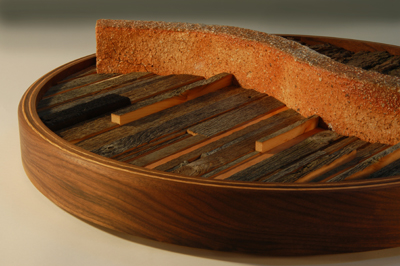
Marc Peter Keane, "SHINSO: Where Forest Meets Field"
On Thursday the 10th, in this commemorative 150th year of the first Japanese delegation to the U.S., a distinguished panel will examine the influence, modification and adaptations of food, music and landscape architecture in Fusion in Motion: 150 Years of Japan-America Integration. This panel will include Theodore C. Bestor, Professor and Chair of the Department of Anthropology at Harvard University, Ian Condry, Associate Director of Comparative Media Studies at MIT and Marc Peter Keane, landscape architect.

The above picture is actually an example of Marc Peter Keane's zen-inducing garden trays for the Portland Japanese Garden in the autumn of last year. You can sense the luxurious quality of the materials he chooses to work with.

And on Monday the 14th, Senator Daniel Inouye, Chairman of the Senate Appropriations Committee and of the Senate Defense Appropriations Subcommittee, is going to address Japan Society. Long a champion of Japanese-American issues, Senator Inouye has been outspoken in urging the Japanese government to accept the relocation of Futenma within Okinawa and thus conclude these recently contentious bilateral negotiations.

But where would the fun be if we told you every exciting summer event we've got planned?

Make sure you keep an eye out for as yet unannounced programs!

Wednesday, May 19, 2010

Green & Clean

Photo courtesy of Virginia Gardiner

In Japanese, the word for "clean" and "beauty" is one and the same: kirei (きれい). With cutting-edge green technology and fixtures rendered into works of art, the Japanese bathroom has become an object of fascination and admiration worldwide.

For those of you who want to become experts on toilets, the reading list isn't long because not enough serious books have been written on the subject. However, your first step should be to buy a copy of Rose George's The Big Necessity: The Unmentionable World of Human Waste and Why It Matters (Metropolitan Books, 2008).

To quote from Virginia Gardner's thorough review:

"With good humor and deep seriousness, George travels the world and presents impressive research about the current state of sanitation. Colorful encounters with people and places are centered around dismal facts. 2.6 billion people worldwide currently have no toilets--as George puts it, "Four in ten people have no access to any latrine, toilet, bucket or box." Resulting waterborne illness kills about 7000 people every single day. The centuries-old solution that's still current--flush toilets with sewers--is already taxing the richest economies, and won't be sustainable anywhere in the long term. George asks why such a fundamental aspect of our designed lives remains on the margins of polite conversation."

On Wednesday, May 26, at 6:30 pm, Rose George and Gunnar Baldwin, water efficiency specialist for TOTO USA, Japan's leading luxury plumbing manufacturer, will explore high tech and eco innovation in the Japanese bathroom, and the prospects for their wide adoption in the U.S.

Japan Society has TOTO washlet toilets installed in all the bathrooms and I'd recommend them personally. Although, sad to say, my enthusiasm lies less in the eco-friendly nature of the devices and more in having a toasty toilet seat in winter.

Hope to see you on the 26th!

Wednesday, May 12, 2010

You want to learn more about Japan?

I have a few ideas.

National Geographic has a great Japan Quiz on their website that's pretty informative. Do you know the last time Mount Fuji erupted? How about the average weight for top level sumo wrestlers or common Japanese hangover cures?

I only got 4 questions out of 10 correct, sad to say. Maybe if I went to the Scarsdale-based non-profit International Lifelong Education (formerly known as the Japan America Learning Center), I would have been more prepared. Reporter Stacy Smith recently featured the ILE in a heartfelt piece for Chopsticks NY. Here's a brief excerpt:

"When you are a child, the opportunity to learn Japanese and experience the culture is invaluable.  Young minds are highly malleable, and I would not be the person I am today if it wasn’t for my sensei’s revolutionary classroom style.  It was the cultural aspects of Japan, unusual to me at the time, which really intrigued me and made me want to stick with Japanese.  I flashed back to this time during a trip to the Scarsdale-based non-profit International Lifelong Education (I.L.E.), formerly known as the Japan America Learning Center. Along with a potpourri of other classes, Japanese is offered at this facility, and its cozy atmosphere and stellar Japanese staff make it ideal for those looking to study this language."

Unfortunately, some of us are no longer children. But some of us have matured onto bigger and better things (like teaching), in which case there are a few other fonts of Japanese knowledge to be visited.

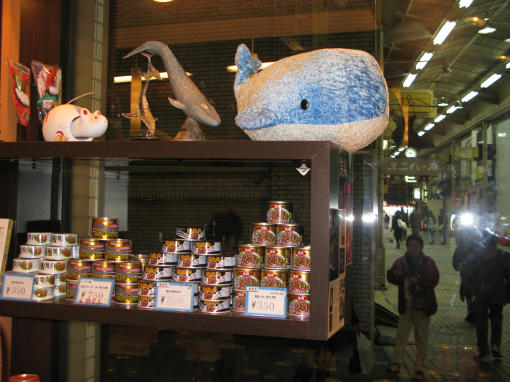
About Japan is an online resource for teachers run by Japan Society's Education Program but really, it's a great learning tool for anyone--like they say, the best way to learn something is to teach it. I just love the range of topics they cover. You can watch survivors of the 1945 bombing of Hiroshima discuss their experiences, paper cranes, and 9/11 and then right after, you can learn about canned whale meat.

Or for those of you who like your knowledge straight up on the rocks with no frills, there's Facts and Details: a comprehensive site with just that.

Thursday, April 22, 2010

Japan Watching

For anyone interested in any part of Japanese life, there are thousands of Japan watching blogs and websites all over the internet. Some focus on current news, some focus on contemporary culture, some focus on in-depth articles, and some focus on food. I like to spend hours perusing the internet for interesting nuggets about Japanese society (heck, I even wrote my thesis on Japanese visual culture), and it's easy to forget how symbiotic culture and economics are.

That's one reason I appreciate Japan Society so much. Being able to learn about Japan-U.S. trade relations and about the global spread of anime all in one place really allows a visitor to get a full picture of contemporary and historical Japan.