Showing posts with label Japanese. Show all posts

Friday, December 27, 2013

Learning Japanese at Japan Society: Laughter, Culture & Connection


In late August, Japan Society appointed Tomoyo Kamimura as the second-ever director of its Language Center, which opened in 1972 with a single class, and has grown into one of the nation's most respected Japanese language learning facilities. Formerly coordinator of The New School's Japanese program, Ms. Kamimura sat down to talk about her experience teaching Japanese and plans for the future of the Center. This is part one of a two-part interview.

Congratulations on your appointment!

Thank you.

Could you walk us through your journey of becoming a Japanese teacher?

My interest in teaching Japanese was sparked while I was an exchange student at Michigan's Kalamazoo College from Waseda University in Tokyo. During that time, I taught various levels of Japanese as a student teacher. When I later became a graduate student in Linguistics at the University of Oregon, I was a teaching assistant to Yoko Matsuoka McClain, who is the granddaughter of famed novelist Natsume Soseki. That experience really had a big impact on me. I discovered the deep pleasure of learning and teaching--just the sheer joy of sharing knowledge and connecting with students. I learned that through her and through teaching at the University. Do you know the literal meaning of “sensei,” which is how you address a teacher in Japanese?

It’s “before, birth,” right?

Right. “Sen” means previous or before, “sei” means to be born. I was born before you, so I have that much more experience and knowledge that I can convey to you. Even though I was not much older than the students I was teaching--I was maybe 23 or 24 and they were in their early 20s--I still felt that sense of responsibility and leadership. I really learned the meaning of sensei from that initial experience.

You took a slight detour from teaching. What happened?

After receiving my MA in Linguistics, I returned to Japan where I continued down the teaching path by becoming an English lecturer at Tokyo University of Science. After three years of teaching English grammar and composition to Japanese undergraduates, I decided to try my hand in the completely different field of finance. I obtained an MBA from Columbia University and, upon graduation, worked at an investment firm. After several years, I realized finance was not my calling, I decided to take a break. In retrospect, I believe working in finance was really just a break from my true calling—teaching. I learned a great deal about finance and business, which benefits me tremendously in running a language program.

Did that have any affect your teaching philosophy?
Although aspects of my teaching have evolved over the years, my core philosophy has remained unchanged. It starts with establishing a personal connection with students based on mutual trust. Once we share that, students are more receptive to learning and I am able to focus on conveying my knowledge to each student.

One effective "hook" to establish this rapport is humour. I find humour tends to put students at ease and lessens feelings of intimidation brought on by the seriousness and rigor of a “difficult” language like Japanese, with its sometimes daunting body of knowledge (for example, Japanese has few western-style cognates or sentence patterns, and two sets of alphabets totaling 92 characters, which must be mastered early on).

You've said that Japanese culture is vital to teaching and learning the Japanese language. How so?

The more I teach Japanese, the more I realize the importance of introducing the culture and customs of Japan into the curriculum. In each lecture I make a conscious effort to weave in various snippets of Japanese daily life and customs. I also find that an offbeat approach is an extremely effective teaching method. Some of the "odd but true" cultural phenomena I cover in classes include slurping noodles, the no “ladies first” custom, the “can’t say no” custom, nose blowing, yakuza tattoos, self-deprecating modesty, “holey” socks, giggling, chopstick and bowing etiquette, and body language, among others.

We've discussed on this blog before that a lot of young people become interested in Japanese through manga or anime. What would you say is the motivation for some of your older students?

If you see men taking Japanese, it's often the case their wives or girlfriends are Japanese. Or they went to Japan as a tourist, loved it there and want to go back. Now they really want to communicate a little bit with people. So that’s their motivation. You don’t see as many American women married to Japanese men, but there are some. And it’s the same reason for them: “I want to communicate with my husband’s family.”

Some of the older students have intellectual curiosity as well, or the kind of thing where they have been very interested in the culture since they were very young.

Japan Society has many cultural offerings in addition to language classes. Do you think that is why the Language Center has the reputation as one of the top in the U.S.?

Definitely. It’s because we have so many varied attractions: cultural lectures and demonstrations, a gallery, a film program, performing arts, business panels--we are constantly doing something tremendously interesting. Even our building is an attraction with its unique Japanese architectural elements. All these things combined really help to differentiate this school from others.

Also Japan Society is located in the middle of New York City, so we have people from all walks of life here. And there are Japanese cultural events all over town, not only at Japan Society. We could not have been number one in a little tiny isolated village in some unpopulated state, with not much going on. Location and activity really have a lot to do with it.

You said the city has people from all walks of life. Do you see that reflected in the classroom in terms of age groups, race, etc.?

Yes, we have students of all different ages. Probably the youngest is around 15, a high school student, to 65 or so. We have New York Times reporters, retired doctors, housewives, businessmen and all that. Last year I had a very interesting mix of people. One high school girl, who was good at Japanese because she taught herself, started partnering with an Indian-American who had his PhD from Cambridge on Einstein’s theory or something. I saw his thesis online. He was the real deal.

At first I wanted to kind of separate them. I thought, “Okay, there’s another high school student, so why doesn't she sit with him?” But the two wanted to be partners and stayed together for the whole semester. And they did very well together. They developed their pair conversation into something different, and she would always give him Hello Kitty candy. Something like that makes me really happy, you know, different people sharing this one purpose, to learn Japanese, but with very different life goals. And yet they achieve something together.

You are planning to try out a suite of unconventional thematic classes during the spring 2014 session, which starts in February. Can you tell us a little bit about these?

The themes are actually hooks to captivate students, but the core class is essentially teaching the fundamentals. Long-time instructor Mami Miyashita-sensei has been preparing a karaoke-based class for several years. When she presented the idea to me, I said, “That’s really catchy, let’s give it a try.” Each student will bring a song they want to sing, and they will explore the song in class--its vocabulary, grammar, structure, even idiomatic meanings. At the end of class they will try to sing the song. Hopefully with a better understanding of its meaning.

Do you think making material fun increases retention?
If you are interested in certain things, you pay more attention. When you are over 20 and try to learn new languages, you have to attach emotion to the learning process. Otherwise it’s very difficult to memorize. If you think about it, much older people, people in their 50s who want to learn Japanese, cannot always remember everything. But if I tell them a funny story about a grammar concept, they are more likely to remember. Emotion has to be involved. Like with songs. The words people learn in songs will stay in their heads if it means something to them.

The other new courses are conversation courses for the higher levels, and an advanced course that will read a complete novel--a kind of intense book club that will try to get through one novel each semester. The Center has traditionally been known to offer 12 levels of Japanese, but with these new courses there are now 13.

As Director, do you intend to do more to bring regular Japan Society programming into your lessons?

Oh yes. We already tried it out with the Japan Society Gallery this most recent session. We took students to see the Mariko Mori exhibition. It was pretty successful. I think students really enjoyed it. It has to be a win-win situation. Our Gallery will gain audience and our language students gain a cultural experience unavailable elsewhere. We took teachers to meet the head of the Gallery, Miwako Tezuka, and she trained them to explain aspects of the art on display. So depending on the level, if you’re taking Level 5 students, Level 10 students, the explanation is going to be a little bit different. We have to do it a few more times to see if it’s really working towards our goals.

Do you see yourself incorporating something like performing arts or even lectures in Japanese?
I would like to. There is so much that goes on here every month. Also one day I would like to offer something like a Cinema Class that coincides with Japanese film events taking place at Japan Society, so that students see the movies and talk about them in class. We have to utilize what we have upstairs in the auditorium and Gallery. We have this tremendous, precious resource, so why not use it to the advantage of our students?

Waku Waku Japanese, the series of short videos that introduce fun Japanese words and phrases, has become very popular with visitors to the Japan Society YouTube page. Do you have plans to continue the videos moving forward?

We are actually creating another version, kind of in between the fun of Waku Waku and Miyashita-sensei’s more grammar-based Japanese language videos. I think it’s going to start in early 2014. I have already chosen the instructor. What I am thinking of is to use it as an introduction to Japan Society as well as a fun way to learn some of the basics of the Japanese language. For that purpose, we may actually shoot the videos in front of the waterfall or in the library, to show this beautiful building to people who want to visit. We won’t of course show everything, because otherwise they won’t come to Japan Society (laughs).

To be Continued!

--Andres Oliver

Start at the very beginning! 

Friday, September 20, 2013

For The Love Of Japan: Inroads To Learning Japanese

Learning Japanese? Ii desu ne! Via.

Susan Berhane follows up her report from the intermediate Japanese classes at Japan Society's language center with a peek into the beginners' classes. An international relations student at Old Dominion University, Susan was a 2013 summer intern for the Society’s Communications Department.

Manga has been an essential part of my life since age 11. For each "A" grade I received, or good report card I brought home, my mother rewarded me with a new Sailor Moon of my choice.

Although it was another way for me to hone my reading skills, Sailor Moon meant much more to me. Beyond being part of Sailor Senshi battling the evil Negaverse, it brought a whole new world of art and literature.

Manga was the gateway to anime once I found Sailor Moon episodes on television. Japanese animation allowed my mind and imagination to go places I could have never dreamed as a child. Series like Dragon Ball Z, Ruroni Kenshin, Ranma, Sakura Card Captor, and Pokémon soon followed and fed my growing love for Japan. By the time I reached high school, I was devouring anything about Japanese history, religion, and economy. Discovering Japan's influence on industry in the U.S. paved the way to a college major in U.S.-Japanese foreign relations.

My first Japanese classes were in college. I had no prior exposure to reading and writing in the language. The courses at my university were extensive, and most students in my class had taken Japanese in high school. Needless to say, my first classes were extremely difficult, but my sensei and my classmates were all very supportive and encouraging. It was exciting to learn new alphabets, hiragana and katakana, and it became even more so when we were introduced to kanji. Learning a language like Japanese may seem intimidating, but the sense of accomplishment when being able to read or write a sentence the first time is exhilarating.

The key to learning any language is study. I repeat: study, study, study! Class time alone will not enable a person to breeze through their favorite manga or watch their favorite anime with no subtitles. Also, using class time well is vital. It is as much a time for review as a time to learn new things.

Studying Japanese requires time and dedication as well as the understanding that everyone learns at a different pace. Being in a class setting teaches you the formality that anime and manga won’t teach you. It also gives you the opportunity to practice and grow with other students who may also share your interests.

Being used to classes at a collegiate level, I was anxious when I observed the intermediate class at Japan Society, but my fears were soon allayed. When I observed a first-time beginners level class, there were many similarities, such as two sensei teaching, the use of colors to help organize and teach, and the enthusiasm and participation of the students.

The number of students was slightly fewer than  the intermediate class , and I was able to ask a few why they decided to study Japanese and what their experience at Japan Society's language center was like.

Just like at the intermediate level, the reasons for studying Japanese were wide-ranging, with inroads from anime and manga, classic literature and having to know basic Japanese for their job. Everyone I talked to praised the language center and told me they were planning to take the next level.

Luis, who discovered the Society's Japanese lessons on YouTube in the process of self-teaching decided to try classes here. "The best part [of the videos] for me was watching Miyashita-sensei. I was hoping to get her but I’m just as happy with my current teacher. All the teachers are amazing at Japan Society--so attentive and caring towards students. Japan Society fit my schedule, offers good prices, and makes me feel more comfortable in learning."

Sean, a businessman who lived in Tokyo for a time and discovered the Center through Yelp, also had some trepidation at the beginning. "I was scared at first because of my own ability--or lack of--to speak and comprehend at a decent speed. But I got support from friends and took the plunge. I was already a Japan Society member and liked the other programs [as an] avid attendee, so everything just made sense. I feel very happy with my decision and feels that I've learned so much already."

Amy, a filmmaker who is working on a project with Japanese themes and actors, discovered Japan Society through the annual summer JAPAN CUTS film festival. "I took classes before, but it had been so long I was afraid I couldn't grasp the materials again and that maybe I was too old to be a student again," she said, which obviously wasn't the case. "I also already liked Japan Society and thought it to be a very cultured place. All the events I ever attended had been held in good taste and I thought they promoted Japan well."

Maggie was also persuaded by the reviews on Yelp, and decided to share her experience. "Another reason why I chose Japan Society is because it fit my schedule and had good prices. I already had some Japanese knowledge but needed to fill in some gaps. Now after being in class for a while I feel good with my decision and very satisfied with what I have learned so far. I also convinced my friend to join with me!"

Maggie brings up a good point. Studying a language can be a lot more fun if you share the experience with a friend. It's like having a built-in study buddy. Of course, as I learned from my experience, the Japan Society language center is full of friendly and helpful students, with potential study buddies aplenty. When you start classes here, be fearless and introduce yourself to everyone right away. Just be sure to do it in Japanese!

バイトがんばるぞ!

--Susan Berhane

BONUS: Too shy to ask someone out? Try it in Japanese! 

Tuesday, August 17, 2010

Language Center: Fall Course List Now Online!

Students at last year's Shodo class. Photo by Satoru Ishikawa

Japan Society Language Center’s fall course list has just been published! You can check it out here.

This fall, there’s a variety of courses, whether you’re a beginner, or have some experience speaking and writing hiragana, katakana and kanji. An advanced class, “Japanese in Anime,” is perennially popular. Dialogue in anime is pretty stylized, so mastering it presents a fun challenge to seasoned students. There are also Shodo (Calligraphy) classes for those interested in learning the ancient art. Japan Society Members can get up to a $50 tuition discount, and discounts are also available for those who need them. Schedules for the individual are flexible as well, with a variety of different sections available for each class. They fill up quickly though, so make sure you sign up soon to ensure you get the section that works best for you.

The Language Center began in 1972, with just one class. In the following years, class selection increased, and its reputation steadily grew. Today, the Language Center is renowned for its quality of teaching and first hand access to information. Students with the Language Center also get access to the C.V. Starr Library at Japan Society. With over 14,000 volumes available, it’s a great resource for students of Japanese, or those generally interested in finding out more about Japan.

Although the best resource for learning languages is always a teacher, or native speaker, there are some cool extras online. The best online Japanese dictionary is Jisho, and Tae Kim has a great compendium of easy to understand grammar lessons. If you’re looking for flash cards, check out smart.fm. You’ll need to register, but it’s free and you can keep track of your progress.

N.O.

Tuesday, May 25, 2010

Summertime and the Learning is Easy

Photo by Kenji Takigami
During July and August, the Corporate Program slows down and takes a well-deserved break but it's during these months that our teaching programs get jazzed up.

Our list of summer courses is extensive and covers all manner of ability levels and topics, including classes on mastering kanji and classes devoted solely to reading. What better way to escape the groggy summer heat than by sitting in a cool, air-conditioned classroom and sharpening your Japanese skills?

And we're not just offering lessons on language.

Nearly every year the Education Program invites high school students to participate in an 11-day immersion workshop on Japanese cuisine and culture, during which they examine the multifaceted history of Japanese cuisine in connection with health and wellness. And on the last day of the program, families and friends are invited to a Japanese-style reception where Japanese dishes and tea are served, including those prepared by chefs and participating students.

This is a great confidence booster for any high school student. For example, Josephine Ledda (grade 12) participated in the workshop in the summer of 2008 and remarked:

The great thing about the Japan Society is that they know how to approach teenagers in a way that'll encourage them to learn. When we took this cooking workshop, we weren't just learning about Japanese food, we were learning about a very important part of their culture. And who wouldn't want to learn about a country through their food?

You can find other participants' comments, photos, highlights, and activity descriptions of the program in 2008 on our website and if you're interested, don't hesitate to sign up for this summer's Japanese Cuisine 101.

And don't forget to check out the 2010 Course Catalog. I bet you'll find something whether you're just beginning, want to brush up your advanced skills, or need a quick conversation lesson.

みんなさん、がんばってね!

Japanese + American

From the California roll to hip hop to Zen gardens, the cultures of the United States and Japan have crisscrossed the Pacific, profoundly influencing one another.

As New York City starts warming up for summer, Japan Society is taking a look at some of the amalgamations of Japanese and American culture over the last 150 years.

First, our Film department is bringing you Toyo's Camera: Japanese American History during WWII on May 28th (this Friday).

Although World War II was a bleak period for Japanese-American fusions, it is a worthwhile topic to begin such a discussion with because knowledge of the internment of Japanese-Americans following the attack on Pearl Harbor remains surprisingly low in both the United States and Japan. To get a better grasp on the cultural exchanges of today, we should first learn about the history and the processes that brought us to the present.

Even though bringing in cameras to the internment camps was prohibited, one man managed to smuggle in his own camera lens and build a camera to document life behind barbed wires, with the help of other craftsmen in the camp. That man was Toyo Miyatake, a successful issei (first generation immigrant) photographer and owner of a photo-shop in the Los Angeles Little Tokyo district, and of one of the many Americans who was interned with his family against his will.

With his makeshift camera, Miyatake captured the dire conditions of life in the camps during World War II as well as the resilient spirit of his companions, many of whom were American citizens who went on to fight for their country overseas. Suzuki's documentary carries on the legacy of Miyatake's photography, addressing the historical context of the internment as well as the stories of other Japanese-Americans who were touched by this unfortunate chapter in American history.

The screening will be followed by a Q&A with special guests writer/director Junichi Suzuki and actor George Takei.

Although he is best known in the U.S. for his role as Hikaru Sulu in the television series Star Trek, Takei is also an outspoken proponent of gay rights and active in state and local politics. He has won several awards and accolades in his work on human rights and Japanese-American relations, including his work with the Japanese American National Museum.

Then prepare yourselves for a busy June!

Marc Peter Keane, "SHINSO: Where Forest Meets Field"
On Thursday the 10th, in this commemorative 150th year of the first Japanese delegation to the U.S., a distinguished panel will examine the influence, modification and adaptations of food, music and landscape architecture in Fusion in Motion: 150 Years of Japan-America Integration. This panel will include Theodore C. Bestor, Professor and Chair of the Department of Anthropology at Harvard University, Ian Condry, Associate Director of Comparative Media Studies at MIT and Marc Peter Keane, landscape architect.

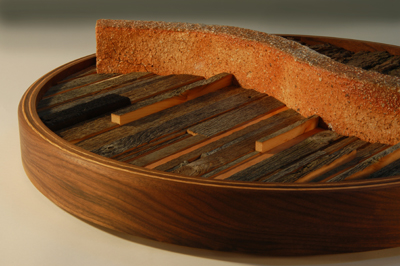
The above picture is actually an example of Marc Peter Keane's zen-inducing garden trays for the Portland Japanese Garden in the autumn of last year. You can sense the luxurious quality of the materials he chooses to work with.

And on Monday the 14th, Senator Daniel Inouye, Chairman of the Senate Appropriations Committee and of the Senate Defense Appropriations Subcommittee, is going to address Japan Society. Long a champion of Japanese-American issues, Senator Inouye has been outspoken in urging the Japanese government to accept the relocation of Futenma within Okinawa and thus conclude these recently contentious bilateral negotiations.

But where would the fun be if we told you every exciting summer event we've got planned?

Make sure you keep an eye out for as yet unannounced programs!