Monday, March 8, 2010

Japan Society in New York Mag


New York magazine featured our upcoming Utagawa Kuniyoshi exhibit in their Art section! Here's an excerpt from their attentive and generous review:

"In an almost 50-year career, spanning the first half of the nineteenth century, Kuniyoshi pushed across boundaries. He uses every part of the frame, deploying strong colors and powerful forms. He also works many genres: landscapes, beautiful women, actors, cats, and mythical animals, not to mention the battles of samurai and legendary heroes for which he is best known. Formally, he is brilliantly innovative: His three-panel compositions revolutionized Japanese art by spreading one image over an entire triptych. Less obviously (at least from our vantage point), he fought the censorship that was imposed in Japan in 1842, fashioning colorful scenes of monsters and demons that contain oblique symbols. They were subtle enough that the bureaucracy permitted his work to be published and widely distributed, while his knowledgeable audience could spot the subtext.

The immediacy of these prints helped attract crowds to last year’s Kuniyoshi retrospective at the Royal Academy of Arts in London, and it should do the same when the exhibition comes to the Japan Society on March 12. It’s nearly all drawn from the collection of Arthur R. Miller, who taught civil procedure at Harvard Law for 36 years, has moderated several acclaimed public-television series on the law, and is now a professor at NYU. “Power,” he said, when I asked what it was about Kuniyoshi that initially captivated him. “I’ve always liked military history, and I liked the images of the samurai and the warriors.” Over 30 years, Miller has acquired close to 2,000 of the 10,000 prints that the artist is thought to have produced."

APEC Japan 2010


The Asia-Pacific Economic Cooperation (or APEC), which turned twenty years old last November, is seeking a fresh way forward against the backdrop of the global economic crisis and the need to further boost open trade and investment in the Asia Pacific region. The coming two years offer Japan and the U.S. a golden opportunity to coordinate their efforts in support of the shared APEC goals, as Japan will host the 2010 summit in November in Yokohama while the U.S. will host the 2011 summit in Hawaii.

Unfortunately, the private sectors of both Japan and the United States tend to have at best a vague understanding of APEC's goals and accomplishments. Japan Society is here to help!

APEC 2010 SOM Chair Ambassador Shigeru Nakamura of Japan and his U.S. counterpart, U.S. Senior Official for APEC Kurt Tong, are going to join us on March 15th for a corporate luncheon to discuss the principal themes for APEC Japan 2010. These include regional economic integration; a strategy for promoting balanced, inclusive and sustainable economic growth; and further emphasis on human security issues to protect societies against a multitude of threats including natural disasters, terrorism, food security and pandemics.

The internet has been buzzing about Japan's new role as the APEC chair. The Japan Times discussed the busy year ahead and on East Asia Forum, Christopher Findlay of Adelaide University intelligently analyzed APEC's goals:

"Balanced, inclusive, sustainable and knowledge-based – these are the dimensions of growth which APEC is talking about. Put their first letters together and you get BISK.

This agenda comes out of a number of forces for change, including the response to the global financial crisis, the concerns which have been raised about the distribution of the benefits of growth within economies (and between them), the intersection of these developments with the climate change debate, and the twittering rate of technological change in the digital world.

So BISK wraps up these forces for change. There are at least two sets of issues. One is what it really means. Is there a core component or is this another list in the APEC list of lists?"

Make sure to read the rest of the article to learn more and then, armed with knowledge, come to Japan Society on March 15th to participate in what should be a fascinating discussion!

Thursday, March 4, 2010

Seasonings

Another food-related post to whet your appetites for j-CATION!


From The Japanese Food Report, the magnificent blog by Harris Salat of our event Japanese Hot Pots to Warm Your Soul, comes another post that's too yummy not to discuss.

Salat discusses the techniques of creating Japanese flavors using staples such as soy sauce, salt, sugar, vinegar, and miso. And he beautifully compares the subtleties in western cooking and eastern cooking:

“Think about Western cuisine as a cuisine of impact. Butter, fats, herbs, spices are combined to create a flavor crescendo. Japanese cuisine, on the other hand, is concerned with balance. Sweet balancing salty, sweet balancing tart, seasonings balancing the natural flavors of ingredients. I read this difference described as a cuisine of addition (Western) versus a cuisine of subtraction (Japanese) — Japanese cuisine being focused on drilling down to the essence of an ingredient’s natural flavor. I also heard this difference, by the way, described as an oil cuisine (Western) versus a water cuisine (Japanese).”

Definitely read the rest of his post!

Language Tips

It's not too late to sign up for the 2010 Spring Intensive Weekend Courses!

These are concentrated courses are held over two consecutive weekends that are designed to teach beginners basic conversational skills. They will be useful to people with traveling difficulties or scheduling problems, or who were too late to register or missed too many of our regular classes. They are also meant for people who are planning to travel or move to Japan.

These classes start this weekend so be sure to register quickly!

The internet is a treasure trove for those trying to master Japanese. Here are a few useful sites I've encountered lately:

Hills Learning: Highly Interactive Language Learning

Not only do they offer high-quality language classes, they also host a variety of events throughout the city, such as food tastings and networking events for those in Asia-related industries. Run by a young and energetic staff, there are a ton of opportunities to be found here.

The Ultra Handy Japanese Verb Conjugator

As stated, this site features a useful conjugator for Japanese verbs, but also included is a list of the most common verbs, a list of verbs that comprise of loan words + suru, and also a translation guide. While not the most comprehensive source, it's definitely worth having on hand for quick needs.

Tae Kim's Guide to Learning Japanese

Resources and tools for the Japanese learner abound here. Whether you're looking for tips on your grammar or other students to chat to, this site is a willing and friendly study-buddy.

みんなさん、がんばってください!

Wednesday, March 3, 2010

Artists: Paramodel & The Arts of Japan's Exploding Subculture

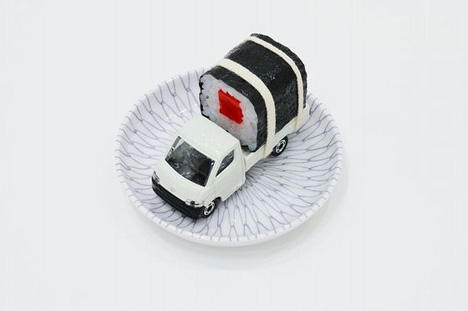
Paramodel is an artist unit formed in 2001 by Yasuhiko Hayashi and Yusuke Nakano. Their title is essentially a manifesto in sum--fusing the words Paradise, Paradox, and Model. In addition, the portmanteau plays upon the Japanese word puramodel (toy plastic dioramas). Through elaborate combinations of plastic toys parts with other everyday objects, they attempt to create blueprints of Paradise whilst underscoring life's paradoxes. Paramodel's expansive oeuvre ranges from massive, room-scaling installations, to mini-sculptures, with videos, drawing, and photography, and other media in between.

The above piece is called tommy sushi and it is featured in a series of similar sculptures that merge TOMY toy cars, plastic food models used by restaurants, and the dishes accompanying those cuisines.

Teriha Faye Yaegashi's interpretation from online gallery AZITO is too good not to repeat verbatim:  

"Strapped down to the toy cars, the plastic foods are readily docked onto the very dishes which would be used in their consumption. Yet, the cars cannot budge from the perimeter of the dish; the food cannot be consumed; and the viewer recognizes the paradox in having the exact collection of items needed for transporting food onto the table and into our mouths - and yet, not being able to perform either unction."

The best part? They're for sale!

Japan Society had a wild exhibition in Spring 2005 called Little Boy: The Arts of Japan’s Exploding Subculture, a major exhibition not only featured in our gallery but also in installations of artwork in New York City’s public spaces and mass transit system. Like Paramodel, the art dealt heavily in the omnipresent plastic toys that have infiltrated our lives. So of course, Godzilla and a pair of Gundams were there, along with fantastic installation pieces like Teruhisa Kitahara's collection of Japanese vintage toys from the 1960s - 1970s below.


The exhibition explored the phenomenally influential manifestations of otaku culture -- the subculture of “geeks” or “pop culture fanatics”-- a fantasy world where apocalyptic imagery, fetishistic commerce, and artistic vanguards meet. The otaku culture, which emerged in the early 1980s, is obsessed with darkly fantastic science fiction, video games, comic books (manga) and film animation (anime). Little Boy features work by leading creators of these popular forms as well as paintings, sculpture, and installations by contemporary Japanese Neo-Pop artists whose work draws from otaku culture.

The exhibition, public art projects, and accompanying book created a dynamic arena in which to discover what Japanese critics, artists and intellectuals consider the most exciting and challenging cultural developments in Japan today.

Curated by celebrated artist Takashi Murakami, Little Boy was the final installment of his Superflat trilogy, a series of exhibitions that have introduced a new wave of Japanese art and explored the interrelationships between vanguard art, manga and anime, and their forerunner, Ukiyo-e woodblock prints.

To learn even more about the powerful yet subtle pieces (or to just check out awesome pictures of the art), check out our Event In-Depth page.

Happy Hinamatsuri!


The above picture is from The Mainichi Daily News Photo Journal. It features kindergarten children floating handmade hina dolls, with their wishes written on them, down the artificial Sakae River in Nagoya’s Naka Ward on Wednesday, March 3, in celebration of the Hinamatsuri, or Dolls Festival.

You can learn how to make your own origami hina or maybe just buy one that looks like Mao Asada!

Perfect Timing


One of Asia’s largest food and drinks fair, Foodex is the go-to event for Japanese and foreign companies to network and show off their products. Foodex Japan is held annually, welcoming 2,400+ exhibitors from 60+ countries and regions. It generally draws over 85,000 visitors over the 4-day show period. With over 30 years serving as Japan's top trade food and beverage show, the event is a platform for exhibitors and visiting buyers to meet and interact, offering key opportunities for dynamic discussions and business possibilities to enter Asian and global markets.

While j-CATION might not be able to host over 85,000 people (the Japan Society building isn't quite THAT large), you'll definitely be able to sample a feast's worth of foods and beverages. And of course, dance!

Since j-CATION is about a month away, a lot of my coworkers are buzzing about it and working hard to make it the best it can be. Even I've been called upon to lend a hand in thinking up mouthwatering tag lines for some of the workshops and events j-CATION is going to feature.

It looks like it's going to be pretty exciting!

Tuesday, March 2, 2010

News Blast


L.A.'s Little Tokyo looks to save struggling newspaper

Mickey Komai opens one of the leather-bound books stored in his Little Tokyo office and delicately turns the yellowed pages filled with Japanese and English script. Here in the pages of the bilingual newspaper his family has run for most of a century is the tumultuous story of Japanese Americans in Southern California. The Rafu Shimpo covered acts to ban Japanese from owning land, bringing over brides and eventually immigrating at all. "Why do people hate the Japanese?" the paper plaintively asked in one 1926 issue. The Rafu declared its "100%" allegiance to America after Japan's 1941 Pearl Harbor attack even after its publisher, H.T. Komai, was one of the first Los Angeles Japanese leaders taken into custody by the FBI.

Japan's jobless rate falls, spending increases

Japan's unemployment rate fell for the second straight month in January and household spending posted solid growth despite a decline in wages -- further signs of recovery in the world's second largest economy. The jobless rate fell to 4.9 percent from a revised 5.2 percent in December, the Ministry of Internal Affairs and Communications said Tuesday. The result was better than the 5.1 percent expected by economists in a Kyodo News agency survey. "At least in the labor market, the worst is over," said Hideki Matsumura, senior economist at the Japan Research Institute.

Culture Bridges Korea-Japan Relations

Some foreign news outlets have shed light on the alleged bad blood between Koreans and Japanese based on Japan's annexation of Korea a century ago to interpret why Koreans were so attached to the 19-year-old. They said Koreans were overjoyed because Kim outperformed her Japanese rival, Mao Asada. But evidence supports the claim that the "Yu-na fever" has little to do with Koreans' deep-seated nationalistic antagonism against Japan. Some evidence indicates that Korea-Japan relations are improving.

Monday, March 1, 2010

Mad, Bad... & Dangerous to Know


At the opposite end of the stereotype of docile Japanese women—heroic good mothers, chaste daughters and hardworking faithful wives—actresses Ayako Wakao, Mariko Okada and Meiko Kaji embodied the transgression of limits, breaking rules, flouting norms and generally upsetting everyone.

This series explores the idea of unconventional beauty that these spellbinding actresses created through an unparalleled body of films. Both Wakao and Okada were muses and inspiration for two major film directors, Yasuzo Masumura and Kiju (Yoshishige) Yoshida, respectively, while Kaji navigated between filmmakers, a wild card of Japanese cinema at the time. Put together, their films delineate what one could call an aesthetic of “convulsive beauty” (André Breton).

The first fiesty film is Tattoo (A.K.A. The Spider Tattoo) featuring Ayako Wakao, Akio Hasegawa, and Gaku Yamamoto. Directed by Yasuzo Masumura. Adapted by Kaneto Shindo from the acclaimed 1910 short story by Junichiro Tanizaki.

This is a dark and erotic tale, Tattoo follows the descent of a woman whose extreme beauty and ferocious nature bring her to the abyss. Otsuya, the daughter of a wealthy pawnbroker, charms her weak-willed lover into eloping with her. As they try to escape, she is abducted and sold to a geisha house by unscrupulous ruffians. Soon, she catches the eye of a tattoo master who uses her body as a living surface for his unholy art: he engraves into her flawless ivory flesh a large and monstrous spider tattoo. As if under the invisible influence of its evil force, Otsuya grows ever more wicked as she excels in the trade she has been forced into, eventually consuming the lives of the unwitting men she holds in her thrall. Did the tattoo artist transform her into the creature she has become, irredeemably spoiling her soul and skin, or in fact unleash the beast within?

Since this is the opening screening, it's going to be followed by the DRESSED TO KILL party!

Better get your tickets soon. I get the feeling this film is going to sell out fast.

Recovery & Future Challenges in Asia & the Pacific


Tomorrow, Asian Development Bank President Haruhiko Kuroda is coming to Japan Society to discuss with us over lunch how to achieve a regionally integrated yet globally connected Asia.

However, Joel Rathus of Meiji and Adelaide Universities recently said on East Asia Forum:

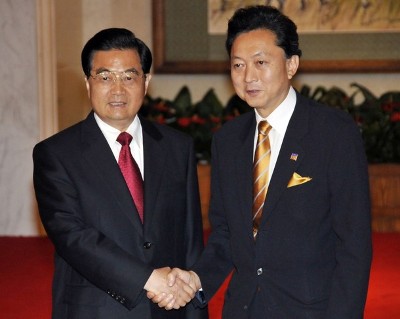
"Much has been made of late about the possibility of Japan drawing closer to China. But on the major issues of historical record, trade, and security, Japan’s China policy is unchanged under the DPJ, and is unlikely to change in the near future."

It will be interesting to see what Kuroda predicts the future holds for Asia in light of Japan and China's continuing tensions.