Showing posts with label World War II. Show all posts

Friday, December 10, 2010

Falls The Shadow


There is a scroll hanging in Japan Society’s Gallery for The Sound of One Hand called Nin. It is a simple calligraphic painting showcasing Hakuin's quick, fluid kanji stokes. In the middle is the distinct yet abstract impression of a person sitting in contemplation. The wall text simply gives the name of the scroll, its date of completion, and the translation: “Become the Master of your own Heart, and do not let it master you.”

This scroll has had profound meaning for and impact on me and the events around me, and I hasten to add that it goes perfectly with Japan Society's ongoing film series Zen & Its Opposite: Essential (&Turbulent) Japanese Art House, which explores the frailty of the human condition and the monstrosity that can manifest within our own hearts. The image also sings true for the latest film series Shadows of the Rising Sun: Cinema and Empire opening today through Sunday at Japan Society.

'Shadows' encompasses the full manifestation of a unmastered heart. Set in the particularly heinous Pacific campaign of World War II and told by keen eyes of filmmakers from Japan and China, the four films collide with Japan’s ambition for Empire and the harrowing descent. The films are not pretty, there is no honor, and no glory but madness. They show the truth of war, a particularly prickly subject to talk about and properly envision on film.

The four featured films are Kon Ichikawa’s Fire on the Plains (1959), Nagisa Oshima’s Merry Christmas Mr. Lawrence (1983),  Jiang Wen’s Devils on the Doorstep (2000), and the New York premiere of  Koji Wakamatsu’s Caterpillar (2010). Each film demonstrates the consequences of untamed ideals loose in an unforgiving world.  Some use dark humor, others use the bare and broken flesh as their medium, and others use the Greek tragedy formula to express when humanity falls into a shadow realm. Issues are dealt with utmost honesty, care and courtesy to all parties in these stories.

A resounding collection of anti-war war films, I'm reminded of the song "Our Solemn Hour" from the band Within Temptation and leave with the words:
Are they themselves to blame, the misery, the pain?
Didn't we let go, allowed it, let it grow?
If we can't restrain the beast which dwells inside
it will find it's way somehow, somewhere in time
Will we remember all of the suffering
Cause if we fail it will be in vain
S.H.

Saturday, July 31, 2010

News Blast: U.S. To Memorialize Hiroshima, Open Executions, Manhwa Vs. Manga And More

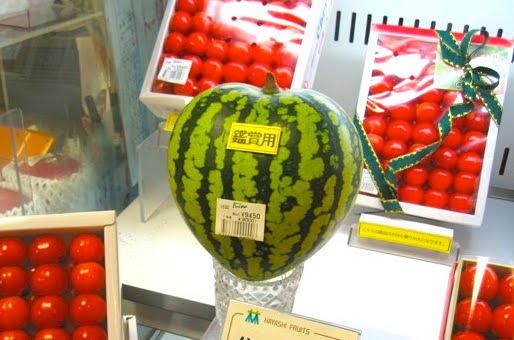
Watermelon love. Via.

U.S. Memorializes Hiroshima

Nearly 70 countries plan to attend the annual peace memorial service in Hiroshima on August 6, commemorating the atomic bombing of the city. For the first time in 65 years, the U.S. will send a representative, Ambassador John Roos. Chief Cabinet Secretary Yoshito Sengoku told Bloomberg-BusinessWeek: "the Japanese government welcomes this... The event will become an opportunity for major nations’ officials to deepen their understanding of our desire for nuclear disarmament and resolve never to allow the misery of A-bomb attacks to be repeated."

Also this week, the U.S.Assistant Secretary for East Asia and Pacific Affairs Kurt M. Campbell testified before the House Armed Services Committee, discussing the political and economic drama unfolding in Asia:
"The U.S.-Japan alliance is the cornerstone of our engagement in the Asia-Pacific. The alliance has provided a basis for peace and security in the Asia-Pacific for a half-century and has -- in many ways -- underwritten the 'Asian economic miracle' and the spread of democratic governance throughout the region. This year the United States and Japan are celebrating the 50th anniversary of our Treaty of Mutual Cooperation and Security, a historic milestone that offers both an opportunity to reflect on the successes of the past and, perhaps more importantly, to chart a forward-looking course for this relationship to ensure that it is well positioned to manage issues of consequence both in the region and beyond."

Foot-and-mouth Contained

Big news in Japan this summer has been the outbreak of Foot-and-mouth Disease in southern Miyazaki Prefecture. While hundreds of cows have been infected and put down, causing consternation with farmers, the disease has not spread to humans yet. After about three months, it seems to have run its course, with the last remaining ban on transfers of livestock in foot-and-mouth affected areas lifted on July 27. Public and sporting facilities are re-opening, and the state of emergency, called May 18th by prefectural governor Hideo Higashikokubaru, has been called off.

The causes of the disease in Miyazaki Prefecture are unknown. The first case was confirmed in late April on a small cattle farm. Scientists have identified the gene sequence of this particular strain of Foot-and-Mouth as similar to recent outbreaks in South Korea.

Japan's Executions Open to the Media

Japan conducted its first executions since the DPJ took power over a year ago. Two hangings were presided over by Justice Minister Keiko Chiba, who has long been an opponent of capital punishment. Many accuse her of political wrangling: she lost her seat in the House in last month’s elections, but retains her position in the Cabinet. Chiba "never signed executions while she was a lawmaker. But now as a private citizen, she quickly gave the go-ahead. I don't understand it," opposition Your Party Secretary General Kenji Eda said. She defends herself though by stating that she "thought long and hard about the death penalty and felt strongly the need for thorough deliberations about capital punishment among the public."

Two days after the executions, the Justice Ministry announced it will open the execution chamber to the media, to address the secretive nature of Japan's capital punishment system and stir debate over the death penalty.

Bite-size News:

►A '111 year-old' man thought to be alive was found dead in Tokyo an estimated 30 years after his death. His family, who recevied pension payments as recently as this year is under investigation on suspicion of fraud and negligence.

►Japanese women had the longest life expectancy in the world for the 25th straight year in 2009.

►Police earlier in the week arrested a truck driver suspected of illegally dumping 2 metric tons of discarded gravestones in a remote, abandoned seafood processing plant.

►Japanese astronaut Soichi Noguchi talks to CNN about 640 he took from space and posted on Twitter.

►With China's soft power strides and South Korea's manhwa competing with manga, Asahi asks if Japan is slipping in the 'cool' culture battles.

►With rural Japan seeing decline, incredible rice paddy art keeps one region on the map.

►A robot that can help people find their glasses is the toast of a Japanese expo.

►The JET (Japan Exchange and Teaching Program) accepted 4334 young people from 36 countries to spend a year (or more) for paid positions teaching English to Japanese elementary and middle school students. The program has long been a cornerstone for Japan-US exchange.

►PM Naoto Kan wife's published a book entitled What on Earth will Change in Japan After You Become Prime Minister?--a scathing list of her husband’s failings.

►From now until November, New York City’s IFC Center holds a Yasujiro Ozu retrospective. This weekend, it’s Brothers and Sisters of the Toda Family. The film came out in 1941 at the height of World War II, and the Japanese occupation of China. It’s a subtly political and rigorously humanistic response to those troubled times.

►Boing Boing’s Mark Frauenfelder is vacationing in Japan this summer, and he’s blogged pictures of some seriously strange watermelons. They’re grown in confined spaces, therefore taking the shape of their containers: hearts, pyramids and boxes. And yes, you’re reading those prices right: 9,450 yen for a watermelon is roughly equivalent to $100.

N.O., S.J.

Friday, July 16, 2010

News Blast: Japanese Beer Blasts In U.S., Interred Intern Concern, Café-ugees, And More!

Yoshitomo Nara to park it on Park Ave. Image via.
Disappointing Election Results for PM Kan

Even though Japan’s new PM, Naoto Kan, was appointed during a trick time in his country’s political history, he enjoyed an early surge in popularity and good will. This popularity proved to be short-live. In the recent elections, the Upper House, once dominated by Kan’s DPJ, underwent an extensive reshuffle, attributed by analysts to Kan’s position to raise the consumption tax.

On the other hand, the changing dynamics of the Upper House benefited smaller, newer political parties like Your Party (Minna no Tou), which came out of it with a healthy-sized minority. Yoshimi Watanabe, leader of Your Party, called for Kan to dissolve Parliament and step down because he foresees an unstable future. Many within the DPJ as well are calling for Kan’s resignation, reflecting the results of the election. To a certain extent, it’s common for Japanese politicians to resign following disappointing results—one of the reasons there have been five prime ministers in four years. However, Renho, minister of government reform asked, "Is there anything to be gained by resignations?" Her words have sunk in with DPJ members, and while many officials holding office in the cabinet lost their Upper House seats, Kan is calling on them for unity, promising a comeback in the polls.

Japan's Interns Allegedly Worked to Death


The Japanese International Corporation Training Organization has come under fire recently for allegedly exploiting foreign interns. This governmental organization makes positions for foreign interns, usually from developing countries, to work in technological or industrial companies and practice Japanese. Over 200,000 interns are in Japan under this program, and last year 27 died from symptoms related to overwork: heart failure, brain disease, suicide, and road accidents. While this figure is down from 35 in 2008, it still raises big concerns for workers' rights. Many interns reported working 100 hours of overtime on top of the 350 per month they were contractually obligated to. A group of lawyers and human rights activists representing the interns is seeking compensation for families of the deceased in Japanese courts.

Internet Café-ugees

CNNGo has a fascinating article on the culture surrounding Japan's internet and manga cafés, which have evolved from rows of monitors with swivel-chairs into warrens of small capsules equipped with reclining chairs, cutting-edge entertainment consoles, and on-demand fast food. Typical prices are about ¥300 an hour (around $4) or ¥1500 per night (about $17), making them a cheap hotel or shelter substitute. Many homeless as well migrate between internet and manga cafés because they are cheap, comfortable, and climate-controlled. Free shower facilities are available too. Of course, this phenomenon has a name coined by the Japanese press: Net Café Refugees.

Bite-size News:

►902 unexploded bombs that date from WWII were discovered beneath an Okinawa restaurant. The bombs, manufactured in America, were not considered to be in danger of exploding and were safely disposed of by the Japanese Bomb-Disposal Squad.

►Christian Science Monitor examines the notoriety of recently deceased Yankee's 'Boss' George Steinbrenner in Japan, drawing character parallels with his Japanese alter ego, Tsuneo Watanabe.

►Torrential rains have plagued the Western regions of Japan this summer, with tragedy in Hiroshima Prefecture this week.

►From The Japan Times: pundits posit a cloud over U.S.-Japan ties, two Americans head to Japan to document A-bomb survivors,  and next fiscal year all Japanese 5th and 6th graders will be taught English.

►WSJ: Japan demands the U.S. stop manga piracy!

►The New York Times reports "cutesy yet devilish cartoon characters created by the Japanese neo-Pop artist Yoshitomo Nara will soon be familiar sights on the Upper East Side landscape."

►Japan electronics giant Sanyo cooks up world's first rice bread cooker.

►Japanese beer to blast in the U.S.

►Photos from the Tokyo Toy Show.

►CNN's top 5 Tokyo experiences.  With sumo, trains, karaoke, fish markets and food, we're eager for their top unexpected experiences.

►Save a bird: adopt a wild cat.

►Bugged wondering who owns the Sony television on the Beatles' Sgt. Pepper's Lonely Hearts Club Band album cover?  This will guarantee to raise a smile!


N.O., S.J.

Tuesday, May 25, 2010

Japanese + American

From the California roll to hip hop to Zen gardens, the cultures of the United States and Japan have crisscrossed the Pacific, profoundly influencing one another.

As New York City starts warming up for summer, Japan Society is taking a look at some of the amalgamations of Japanese and American culture over the last 150 years.

First, our Film department is bringing you Toyo's Camera: Japanese American History during WWII on May 28th (this Friday).

Although World War II was a bleak period for Japanese-American fusions, it is a worthwhile topic to begin such a discussion with because knowledge of the internment of Japanese-Americans following the attack on Pearl Harbor remains surprisingly low in both the United States and Japan. To get a better grasp on the cultural exchanges of today, we should first learn about the history and the processes that brought us to the present.

Even though bringing in cameras to the internment camps was prohibited, one man managed to smuggle in his own camera lens and build a camera to document life behind barbed wires, with the help of other craftsmen in the camp. That man was Toyo Miyatake, a successful issei (first generation immigrant) photographer and owner of a photo-shop in the Los Angeles Little Tokyo district, and of one of the many Americans who was interned with his family against his will.

With his makeshift camera, Miyatake captured the dire conditions of life in the camps during World War II as well as the resilient spirit of his companions, many of whom were American citizens who went on to fight for their country overseas. Suzuki's documentary carries on the legacy of Miyatake's photography, addressing the historical context of the internment as well as the stories of other Japanese-Americans who were touched by this unfortunate chapter in American history.

The screening will be followed by a Q&A with special guests writer/director Junichi Suzuki and actor George Takei.

Although he is best known in the U.S. for his role as Hikaru Sulu in the television series Star Trek, Takei is also an outspoken proponent of gay rights and active in state and local politics. He has won several awards and accolades in his work on human rights and Japanese-American relations, including his work with the Japanese American National Museum.

Then prepare yourselves for a busy June!

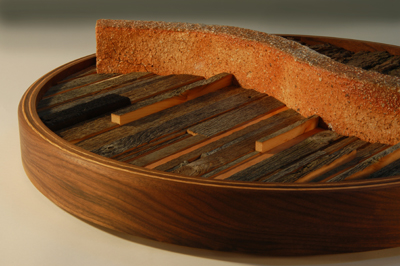
Marc Peter Keane, "SHINSO: Where Forest Meets Field"
On Thursday the 10th, in this commemorative 150th year of the first Japanese delegation to the U.S., a distinguished panel will examine the influence, modification and adaptations of food, music and landscape architecture in Fusion in Motion: 150 Years of Japan-America Integration. This panel will include Theodore C. Bestor, Professor and Chair of the Department of Anthropology at Harvard University, Ian Condry, Associate Director of Comparative Media Studies at MIT and Marc Peter Keane, landscape architect.

The above picture is actually an example of Marc Peter Keane's zen-inducing garden trays for the Portland Japanese Garden in the autumn of last year. You can sense the luxurious quality of the materials he chooses to work with.

And on Monday the 14th, Senator Daniel Inouye, Chairman of the Senate Appropriations Committee and of the Senate Defense Appropriations Subcommittee, is going to address Japan Society. Long a champion of Japanese-American issues, Senator Inouye has been outspoken in urging the Japanese government to accept the relocation of Futenma within Okinawa and thus conclude these recently contentious bilateral negotiations.

But where would the fun be if we told you every exciting summer event we've got planned?

Make sure you keep an eye out for as yet unannounced programs!