Friday, January 21, 2011

Going To "Hell"

Enjoy a steaming bowl of "Hell" at Japan Society. Photo (c) Everett Collection

"Jigoku is more than merely a boundary-pummeling classic of the horror genre—it’s as lurid a study of sin without salvation as the silver screen has ever seen," notes Chuck Stephens in his wonderful essay for Criterion.

Regarded as a seminal cinematic depiction of Hell, Nobuo Nakagawa’s Hell (1960), or Jigoku is far less known outside Japan. Serving later as the basis for two remakes, one by Tastumi Kumashiro in 1979 and the other by Teruo Ishii in 1999, Nakagawa’s original was "[b]orn from some unholy union of Goethe’s Faust and Genshin’s Ojoyoshu, a tenth-century Buddhist treatise on the various torments of the lower realms."

Depicting sin, suffering and punishment, Hell brings to screen beautifully the complexities of human intentions, choices and their consequences. Stephens continues:
Resolutely unafraid of incomprehensibility, Jigoku proves ultimately less an articulation of the moral and postmortal consequences of sin than a free-associative head-on collision of righteously motivated evil intentions and well-intentioned innocents who capriciously lose their souls.
Nakagawa started his film making career in 1924 and made some 90 feature films by the time of his death in 1984. During his tenure at Shintoho, he earned a distinction as the "master of Japanesque horror" in addition to his earlier reputation as "the Japanese Alfred Hitchcock". Hell was the last in a "nine-film string of innovative and deliriously eccentric horror films" made by Nakagawa during the 1950s at Shintoho and given the backdrop of the studio going out of business, the film was subject to budget-saving strategies.

In anticipation of Japan Society's screening of Hell, Steve Dollar at The Wall Street Journal wrote that the movie "sits very near the foundations of the Japanese horror film." He continues:
[Director] Nakagawa's stark and gripping imagery has the punch of a surrealist noir, hypnotizing with poetic visual flourishes before diving into the fiery, forsaken pit of the title—which is realized with an extreme flair for the grotesque and hallucinatory.
The U.K’s Eye for Film comments on the movie's capacity to shatter reality:
Jigoku is a beautiful film. Its play with lighting effects, colour gels and jarring camera angles makes everything - both on earth and below - seem an off-kilter nightmare, while the soundtrack of jazz, wood percussion and theremin only adds to the sense of disorientation. Realism this is not, but Nakagawa is nonetheless concerned with depicting a society that has lost its moral balance, at a time when memories of war-time horror were still fresh in the Japanese mind, while post-war modernisation was engendering its own anxieties about over-permissiveness and the dissipation of traditional values.
Hell plays today, Friday, January 21, as part of the monthly classics series Zen & Its Opposite: Essential (& Turbulent) Japanese Art House. Tickets are $12/$9 Japan Society members, students & seniors. The Zen & Its Opposite series concludes February 18 with Okamoto's Sword of Doom.

T.D.

Friday, January 14, 2011

CelebrASIA: 3 Months of New Year’s Festivities For Families


My oh shishi-mai! Photo by George Hirose.

A lively lion dance performance in China, families in Japan making trips to Shinto shrines and Buddhist temples, families in Central Asia clamoring pots and pans to drive away evil spirits of the past year, or Persian families creating beautiful altars honoring their ancestors—all provide a glimpse into the rich and festive sights and sounds of New Year’s celebrations in Asia. As countdowns, champagne and cheers reverberate throughout the Western World, many cultures in Asia welcome the New Year calling it by diverse names such as Norouz (Persia), Oshogatsu (Japan), Losar (Himalaya), and Sollal (Korea) with unique and sometimes intriguingly interrelated practices.

This year Asia Society, China Institute, Japan Society, Korea Society and Rubin Museum have come together to bring the joys of celebrating New Year’s across Asia. In the first of hopefully a regular series, CelebrASIA NYC: New Year’s Festivities for Families encompasses six pan Asian events at five esteemed New York City cultural centers.

On Sunday, January 16, Japan Society’s Japan’s New Year’s Day Celebration: Oshogatsu kicks off the series with fun-filled traditional Japanese New Year’s activities, including mochi-tsuki  (rice pounding), shishi-mai (lion dancing accompanied by live taiko drumming), gogaku court music, kakizome (special New Year’s calligraphy), kite-making, fukuwarai (funny-face game), karuta (card matching game) and kamishibai story telling. Children of all ages are invited to participate and activites fill every nook and cranny of the Society's landmark building.

The series continues with Family Day: Korean New Year, Saturday, January 22; Moon over Manhattan, Saturday, January 29; Chinese New Year's Day, Sunday, February 6; Family Day: Himalayan New Year Celebration, Saturday, March 5; and Spring into Norouz, March 12. Full details at http://www.celebrasia.org/.

Japan Society's Oshogatsu fest takes place in two sessions at 2pm and 3pm. Tickets are $5 for members, $12 for nonmembers, and free for children under ages 2 or under. More at http://www.japansociety.org.

A.T.

Sunday, January 2, 2011

Cuts Like A Knife: The Rock Art of Yoshitomo Nara


I first came across the work of Yoshitomo Nara at Manhattan's Kinokuniya Bookstore. The thing that stood out for me as I was flipping through a book of his artwork was its simplicity. A raw, color pencil drawing of a child on what appeared to be graph paper, holding a small blade in its hands with the caption “Slash with a Knife!” kick started my fandom from that day forward.

So I was thrilled to visit Asia Society's enormous, all encompassing Nara retrospective entitled Nobody’s Fool featuring his drawings and paintings as well as work in mediums not often associated with him such as ceramics and sculpture -- all exuding Nara’s defining style.

Nara’s paintings typically have no backgrounds, or if there is a background it is on a small scale, thrusting the subject center stage. Often the subject is complimented by edgy, profane (often grammatically incorrect), yet somehow endearing slogans that appear to jump at the viewer.

Nara grew up in Aomori prefecture in northern Japan and speaks about his childhood as a period of isolation (one of the three central themes of the exhibit). It was not uncommon for Nara to come home and find an empty house. He also lived and studied art in Germany for a number of years which was another period of isolation for him. As such, the majority of his work features children or dogs as the main subjects due to his belief that they are the loneliest and most isolated beings in society.

Nara’s other main themes are rebellion and music. His love of 60’s and 70’s rock and punk and 90's grunge is prevalent in his work, with some pictures featuring song lyrics or titles lifted directly from his favorite artists' songs. Unlike the punk movement that inspired him over the years, Nara's idea of rebellion is not political. Rather, he encourages the viewer to follow his/her hopes and dreams even when the larger elements in society would have it otherwise.

Nobody’s Fool closes today, unfortunately, but much of the work and commentary is featured on Asia Society's micro site. You can even get a panoramic view from the middle of his three giant, adorable, somewhat terrifying puppy sculptures without leaving the comfort of your home!

The Asia Society Museum is located at 725 Park Avenue (at 70th Street). Tickets are $10 for general admission, $7 for seniors, $5 for students with ID, and free for members and persons under 16.

T.D.


Image: Make the Road, Follow the Road, 1990. Acrylic on cotton. H. 39 3/8 x W. 39 3/8 in. (100 x 100 cm). Aomori Museum of Art, 2678. Image courtesy of the artist.

Saturday, December 11, 2010

The Hollow Fires


The sound of dried plants and drier voices greets us, nothing but wind and the slow jerky movements of creatures that where once . Watching the scene unfold, I cannot help to think of the first section of TS Eliot’s "The Hollowed Men": "We are the hollow men ... Our dried voices, when / We whisper together / Are quiet and meaningless / As the wind in dry grass / Or rats’ feet over broken glass".
 
Kon Ichikawa's Fire on the Plains, part of the ongoing Shadows of the Rising Sun film series, takes place during the last throws of the Japanese Imperial Army's hold on the unforgiving landscape of the Philippine island of Leyte in February 1945. We follow Private Tamura, a sunken-eyed, tubercular straggler; his army of walking skeletons with tattered clothes barely fitting their wasting frames; and other unfortunate beings Tarumua meets while traveling.

There is nothing triumphant or sentimentality patriotic in their situation--only the silent battlefield where triumphs and defeats mean equally nothing. The slow procession of the walking dead mirrors their agonizing craving for the nectar of life, but they merely suffer the eternal starvation brought on by their own barbaric, hollow and feeble attempts at glory. Their voices and gestures are as nonsensical as the wind through the dead grass. They are stuffed with hollow shadows of their former self. Again, they are Eliot's  hollow men on the hollow plains:
Shape without form, shade without colour,
Paralysed force, gesture without motion;
Those who have crossed
With direct eyes, to death’s other Kingdom
Remember us-if at all-not as lost
Violent souls, but only
As the hollow men
The stuffed men
Shadows of the Rising Sun continues tonight with Caterpillar, and Devils on the Doorstep and
Merry Christmas, Mr. Lawrence on Sunday, December. Tickets are $12 for general admission and $9 for Japan Society memebers, students & seniors.

Friday, December 10, 2010

Falls The Shadow


There is a scroll hanging in Japan Society’s Gallery for The Sound of One Hand called Nin. It is a simple calligraphic painting showcasing Hakuin's quick, fluid kanji stokes. In the middle is the distinct yet abstract impression of a person sitting in contemplation. The wall text simply gives the name of the scroll, its date of completion, and the translation: “Become the Master of your own Heart, and do not let it master you.”

This scroll has had profound meaning for and impact on me and the events around me, and I hasten to add that it goes perfectly with Japan Society's ongoing film series Zen & Its Opposite: Essential (&Turbulent) Japanese Art House, which explores the frailty of the human condition and the monstrosity that can manifest within our own hearts. The image also sings true for the latest film series Shadows of the Rising Sun: Cinema and Empire opening today through Sunday at Japan Society.

'Shadows' encompasses the full manifestation of a unmastered heart. Set in the particularly heinous Pacific campaign of World War II and told by keen eyes of filmmakers from Japan and China, the four films collide with Japan’s ambition for Empire and the harrowing descent. The films are not pretty, there is no honor, and no glory but madness. They show the truth of war, a particularly prickly subject to talk about and properly envision on film.

The four featured films are Kon Ichikawa’s Fire on the Plains (1959), Nagisa Oshima’s Merry Christmas Mr. Lawrence (1983),  Jiang Wen’s Devils on the Doorstep (2000), and the New York premiere of  Koji Wakamatsu’s Caterpillar (2010). Each film demonstrates the consequences of untamed ideals loose in an unforgiving world.  Some use dark humor, others use the bare and broken flesh as their medium, and others use the Greek tragedy formula to express when humanity falls into a shadow realm. Issues are dealt with utmost honesty, care and courtesy to all parties in these stories.

A resounding collection of anti-war war films, I'm reminded of the song "Our Solemn Hour" from the band Within Temptation and leave with the words:
Are they themselves to blame, the misery, the pain?
Didn't we let go, allowed it, let it grow?
If we can't restrain the beast which dwells inside
it will find it's way somehow, somewhere in time
Will we remember all of the suffering
Cause if we fail it will be in vain
S.H.

Friday, December 3, 2010

Carnegie Hall's Passport To Japan

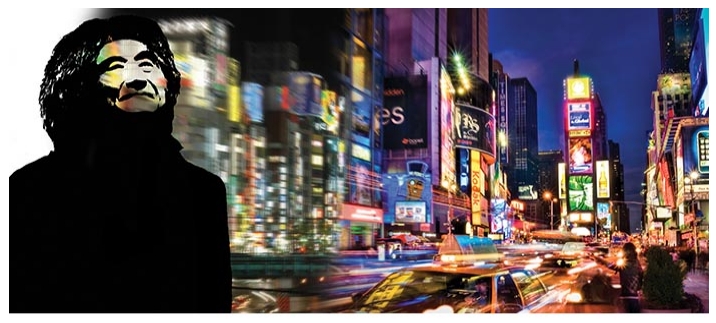
Seiji Ozawa infuses New York with Japan.

Everyone knows how to get to Carnegie Hall (practice!), but who knew once you got there it would be a trip around the world!

A true New York institution, Carnegie Hall is what people think of when they dream of the world's finest Western classical music and its best performers. Carnegie Hall has also taken on the role of cultural ambassador, presenting stimulating series of world music. Last year they gave us the inspired Ancient Path, Modern Voices Chinese series, and this year they've outdone themselves with a staggering feast of Japanese culture.

JapanNYC is a citywide festival that "explores the Japan of today, where newfound artistic sensibilities continue to transform and revitalize the cultural landscape." The festival features some 65 Japan-related events, including several Carnegie Hall produced concerts featuring world renowned artists, traditional and new Japanese theater, manga workshops, film, butoh dance, pop art exhibitions, and a variety of music genres.

Sprawling from December through April, JapanNYC was spirited by the legendary conductor Seiji Ozawa, who conducts two main event concerts with Japanese ensembles he has established. On December 14, he officially launches the festival with the Saito Kinen Orchestra. The program features a U.S. premiere co-commissioned by Carnegie Hall from composer Gondai Atsuhiko, Mitsuko Uchida  performing Beethoven's Piano Concerto No. 3, and what is sure to be a luscious performance of Brahm's first (there will be an encore performances of this program on December 15 and 18). Maestro Ozawa delivers another cornerstone concert in the second half of the festival March-April with a rare overseas appearances by the Seiji Ozawa Ongaku-juku.

Honored to be part of the festival, Japan Society's contributions include the classic Zen painting exhibit The Sound of One Hand (through January 9), the contemporary Japanese visual art show Bye Bye Kitty!!!  (opens March 18), and rare performances of ancient noh and kyogen theater (March 24-26.

While the full schedule is wonderfully overwhelming, December highlights, in addition to those mentioned above, include:

Takemitsu Film Festival – A 14 Day film fest showing films that were scored by famed Japanese composer, Toru Takemitsu presented by Film Forum. Begins December 3.

Calligraphy and Manga Education Events – The New York Public Library hosts teen manga-drawing workshops with Misako Rocks. December 9, 16.

Peter and the WolfGuggenheim Museum presents contemporary performance of the famous Russian tale featuring an installation inspired by contemporary Japanese anime and features a newly commissioned visual concept by Japanese artist Rei Sato. December 11, 12, 17, 18.

Winds and Strings of Change: Glories of the Japanese Traditional Music Heritage – Another tribute to Toru Takemitsu featuring the use of traditional Japanese instruments such as the Biwa, the Shakuhachi and the Koto presented at the Miller Theater. December 16.

A Tribute to Toru Takemitsu – Held at Zankel Hall, this performance will feature some improvisations on Takemitsu’s film scores. December 17.

Yoshitomo Nara: Nobody’s FoolAsia Society's acclaimed exhibit featuring tons of work one of the world’s most cutting edge artists. Through January 2.

On Becoming an Artist: Isamu Noguchi and his Contemporaries, 1922–1960The Noguchi Museum  highlights the relationship between famed Japanese landscape artist Isamu Noguchi to other artists during his time period. Through April 24.

T.D., S.J.

Thursday, December 2, 2010

Japan & Korea: Decades Of Geopolitical Musical Chairs

This is not the sound of silence. Via.

Up and down--one chair pulled and the music continues. The players are Japan and South Korea, playing for decades in an international arena with their neighbor who has had an amazing growth spurt, China, and their cantankerous cousin North Korea. The music is the never ending (and often dissonant) song of diplomacy.

If we chronicle Japan and Korea’s quandary from 1990s to the present, it has been a continuing game of musical chairs. 720 miles apart, Seoul and Tokyo have faced economic strife and regional security detriments. Although many of the crises were similar, the two countries chose different paths with different geopolitical and domestic consequences.  

South Korea, historical and regionally, has always been at the mercies of their neighbors and the international community. Currently they are rekindling their relationship with the U.S. and cooling to China since the sinking of the South Korean Cheonan. They faced many of the same economic, political and demographic problems Japan now faces. They made strong and bold reforms, created a robust economy, strengthened a vigorous and interactive democracy—all to enhance their geopolitical weight so they are no longer at the mercies of the world. Yet despite these accomplishments, they remain at an impasse with North Korea, where things have heated up of late.

Japan’s game change happened in 2009, when the Democratic Party of Japan defeated the more conservative Liberal Democratic Party, ending the latter's near unbroken rule since World War II. This was celebrated as a major step in Japan’s democratic system, but has so far created risks in every level of Japanese life: political, bureaucratic, economic and public. The situation now threatens the efforts of Japanese leaders and their allies to promote economic recovery and ensure stability in the region.

On December 8, Japan Society welcomes Harvard University Kennedy School of Government’s William Overholt to lead the hard-hitting discussion Japan & Korea: Domestic Reform & Geopolitical Shifts. Overholt is a one-time investment banker who has become a prominent Asian policy expert over the last few decades, planning studies at one time for the U.S. Department of Defense, Department of State, National Security Council, and Council on International Economic Policy, as well as penning six books (most recently Asia, America and the Transformation of Geopolitics).

In the discussion, Overholt poses the question: can Japan revive without crisis amidst unstable internal power structures and with such alarming international security issues unfolding in East Asia? He also addresses Japan's importance for Asia and South Korea’s management of a deteriorating North Korea.

The lively and timely discussion is presided by Robert Fallon, a professor at Columbia Business School, who also serves on the boards of Japan Society and Korea Society. Chairs will be provided, and the music has already begun to play.

S.H.

Monday, November 29, 2010

Dance Duo Bends Beyond Butoh, Makes Movement For Everybody


"You connect to their world not by watching, but by imagining that you are living inside their bodies."

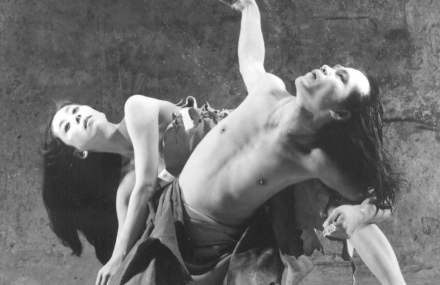
Percussion pounds in the distance as identical, scantily clad figures with snow white faces move together through time in a slow, fluid motion—an odd combination of spiritual ritual and martial art. The slowness is gripping, the stillness is suffocating, and a sense of awe emerges from the twisting and tangling of limbs and faces.

Butoh, Japan's inimitable form of modern dance was founded in the post war period by Tatsumi Hijikata and Kazuo Ohno. Hijikata felt dance in Japan following World War II was merely a copy of Western dance and wanted to create a form uniquely Japanese. A sense of rebellion permeated butoh performances, which emerged from a backdrop of student riots and protests. The movements were incredibly raw, as though animal instinct and sexual desire governed the dancers. This was intentional, as Hijikata and Ohno sought to tackle taboo ideas regarding human sexuality and challenge authority by showcasing the human body’s untamed movements. 

Two contemporary artists who tamed the untamed are the legendary husband and wife choreography/dance team Eiko and Koma. Though they met at Hijikata's studio in 1971 and studied with Ohno, they don't consider their dance butoh out of respect to the masters. Nonetheless the influence manifests itself in their style. In her fantastic recent New York Times profile of the "king and queen of slow", Gia Kourlas describes Eiko and Koma's movement:
While the moving-painting quality of their choreography is profoundly arresting, both theatrically and visually — they find the beauty in ugly — there is another layer that gets to the essence of nature. You connect to their world not by watching, but by imagining that you are living inside their bodies.
Japan Society, which debuted Eiko and Koma in 1976 and has presented them many times to great acclaim, hosts Eiko & Koma: Delicious Movement Workshop. The venerable duo hopes that anyone who takes their workshop—no matter what level of dance experience—find a renewed sense of focus and coordination, as well as take a primal pleasure in the simple act of moving one’s body.

The one-day workshop is held on December 4. Tickets are $40 or $32 for Japan Society members.

Friday, November 19, 2010

Kids: Sumi For A Sunny Sunday

Beware the sumi-e dragons! Via.

There is an ancient story that a monk was working on a sumi-e painting of dragons. When he finished his painting, he went to the head monk to seek his approval. The head monk was very pleased with the young artist’s work but asked why there were no pupils in the dragons' eyes. The young artist shyly looked down and expressed that if he added pupils he feared the dragons would come alive. The head monk scoffed and asked him to put pupils in the dragons' eyes to prove he was wrong. The young monk walked over, lightly dipped his brush in the ink and placed the pupils in the two dragons' eyes. Once he finished and moved away from the paper, the two dragons blinked their eyes, slowly rose out of the paper and with one swift movement flew away. The head monk looked on astonished and then understood why the young monk was reluctant of placing the pupils in the dragon’s eyes. He did not just draw dragons but he captured their essence.

In Composition Arthur Wesley Dow describes the nature of sumi-e painting:
the painter…put upon the paper the fewest possible lines and tones; just enough to cause form, texture and effect to be felt. Every brush-touch must be full-charged with meaning, and useless detail eliminated. Put together all the good points in such a method and you have the qualities of the highest art...
A gorgeous description for adults but one wonders how this expression of sumi-e painting can mix with kids. Gather around and I will tell you sumi-e ink painting is very easy and fun for children. First off, the tools are only ink, a brush and a piece of paper. Secondly, the process is not painstaking reproduction of the subject, but rather a brisk and concentrated capturing of its essence.
Thirdly, sumi-e paintings have made their mark in contemporary culture through the Playstation 2 and Wii consules video game called Okami.  The action-adventure game allows the player to control the main character in an interactive storyline, accomplished through the unconventional use of animated sumi-e illustration with other traditional Japanese art forms. 

On November 21 Japan Society’s Education Program hosts Art Cart:  Sumi Ink Painting.  Led by a  Japan Society educator and artist Linda Malhauser, a member of the National Sumi-e Society of America,  children learn basic painting techniques, and create original works of art in reaction to the wonderful art in our current exhibitions, The Sound of One Hand: Paintings and Calligraphy by Zen Master Hakuin , which features an array of kid-friendly figures such as ghosts and demons, dragons, acrobats, dancing mice, and monkeys!


Hakuin's hanging monkey. Via.
S.H.

Thursday, November 18, 2010

Inside Your Zen Side

We think 60,000 thoughts per day, notes photographer Dana Lane. Via.

This season we've brought you Zen through art, food, films, writing, painting, theater, and literature.

Now we're bringing you to Zen.

Japan Society hosts its first-ever meditation workshops, Zen For Everyone, with renowned Buddhist scholar and priest, Roshi Pat Enkyo O’Hara. Enkyo Roshi currently serves as Co-Spiritual Director of the Zen Peacemaker Family, a spiritual, study and social action association. Her focus is on true self-expression, peacemaking and HIV/AIDS activism. She holds a Ph. D. in Media Ecology and taught Multi-media at my alma mater, New York University for over 20 years.

In three separate workshops on November 21, December 12 and January 8, Enkyo Roshi discusses the spiritual side of Japan Society's Hakuin exhibit, and instructs on proper zazen (sitting meditation) technique. According to Village Zendo, where she teaches, here are several key points to remember:
Whatever position you choose, sitting in a chair, full lotus, half-lotus, Burmese, or kneeling with a cushion or bench, choose a posture you can hold comfortably for 30 minutes.

Once seated, roll your hips slightly forward, allowing your belly to relax and your breath to move freely.

Center your spine by gently swaying from left to right in decreasing arcs.

Push the crown of your head toward the ceiling, straightening and extending your spine. Then relax your shoulders.
We've already discussed  the benefits of meditation in one’s daily life. It’s a great stress reliever, guides practitioners to a higher state of consciousness, and instills a greater sense of focus, which can be applied in any real world situation. But one question remains: how exactly does one truly meditate? Zen for Everyone is destined to enlighten all involved .

T.D.