Tuesday, August 31, 2010

Summer Reads: Books About And Inspired By Japan

Bet you can't read just one. Via.

It's the last week of summer and we assume you're headed out of town or just in need something to keep your mind off the crushing fall season about to tumble upon you (or maybe that's just us). Behold our first ever Japan-related reading list! Enjoy these bestsellers and perennial favorites—perfect for the beach, poolside, or any well-lit destination your Labor Day Weekend takes you. Stay cool and have a great end-of-summer!

Tokyo Vice, Jake Adelstein
A firsthand look at Japan "from the underbelly up" by the only American to be admitted to the Tokyo Metropolitan Police press club. Read excerpts at NPR and Metropolis. 

The Chrysanthemum and the Sword: Patterns of Japanese Culture, Ruth Benedict
Whether promoted as essential reading or panned as a populist mainstream misreading, there's no denying the lasting influence of Benedict's seminal piece of cultural studies (just be sure to follow it up with some of the more contemporary books on this list.) Acclaimed for its accessibility and eloquence, if not accuracy or scholarship, the book recently got the "Mad Men" bump.

Snakes and Earrings
, Hitomi Kanehara

A dark tale that explores one girl’s dangerous obsession with fashionable body modifications in present day Tokyo. Winner of the Akutagawa Prize for Literature in 2003.

Japanamerica, Roland Kelts 
The Village Voice calls Kelts' lively distillation of the otaku invasion of America "a Wired magazine article on steroids." Read the book's foreword.

The Selling of the American Economy: How Foreign Companies Are Remaking the American Dream, Micheline Maynard
Japan plays a key role Maynard's lucid and insightful re-education of foreign investment in America. Read The Times excerpt.

The Thousand Autumns of Jacob de Zoet, David Mitchell
Behind this wildly popular, rip roaring adventure tale is a well researched and richly described Japan at the turn of the 19th century, including the strange but true story of the artificial island of Deshima—the only place foreigners were permitted. Check out excerpts at The Times, NPR, and from the author. Plus, Dave Eggers really liked it.

Norwegian Wood, Haruki Murakami
This modern classic coming of age story sold more than 4 million copies in Japan in its 1987 release and established Murakami around the globe. Read it before the film adaptation is released later this year.

Edwin O. Reischauer and the American Discovery of Japan, George R. Packard

A graceful biography of the charismatic man who helped steer Japan toward democracy and then wrote its definitive English-language history. Japan Times review.

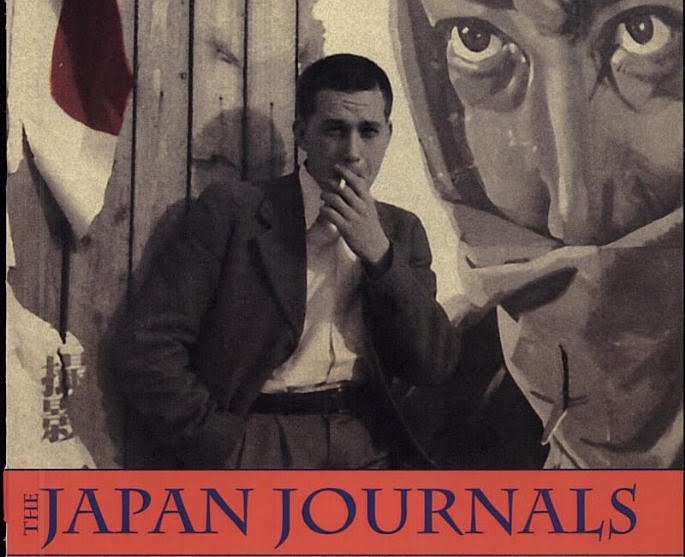
The Japan Journals: 1947-2004
, Donald Richie
An intriguing record of the nation from one of the world's most influential Japanese culturalists. Richie paints a fascinating firsthand postwar picture of Japan and the ritzy glamour of the film industry. The Times says "wonderfully evocative and full of humor, but also honest, introspective and often poignant."

Confucius Lives Next Door, T.R. Reid
Known for his trenchant, funny, and deeply knowledgeable commentaries on NPR, Reid discovers the "postwar miracle" of Japan when his family is transplanted there from the Midwest. Examining East Asia's impressive social stability, he highlights the many benefits (and some drawbacks) of the "Asian Way."

Edokko: Growing Up a Foreigner in Wartime Japan, Isaac Shapiro

Born in Tokyo in 1931, Shapiro, a famed New York lawyer, shares  Japan's lasting influence on him and his Jewish family transplanted from Europe.

The Tale of Genji, Murasaki Shikibu
This 11th century masterpiece by the Lady Murasaki is considered one of the world's first novels, brimming with the subtleties of the era's etiquette and ritual. Of course, a classic of such historical significance has no less than three lauded  translations to choose from: the unabashed Edwardian eloquence of the 1933 interpretation by Arthur Waley (who's story is itself fascinating), Edward Seidensticker's more literal 1976 version, and the more recent and faithful Royall Tyler interpretation from 2001. Notes one JS staffer: "Although Waley took considerable liberties with the original and did not have the resources of modern scholarship at his disposal, his elegant writing has an appeal that cannot be matched by the more accurate versions by Seidensticker and Tyler." While you mull how to choose a translation, prep for reading with images of the story's many locales.

In Praise of Shadows, Junichiro Tanizaki
This classic treatise on Japanese aesthetics retains the elegant prose that Tanizaki employed in his many lauded works of fiction.

Buddha, Volume 1: Kapilavastu, Osamu Tezuka
A manga retelling of the life and times of Gautama Buddha (nee Siddhartha) that is as entertaining as it is enlightening. BBC calls it "a vibrant, action packed epic" (link includes an image gallery). TIME's rich overview notes: "filled with beauty, cruelty, drama, comedy, romance and violence, Osamu Tezuka's Buddha encompasses the entirety of life in a masterpiece of graphic literature."

For even more staff picks, click here.

Japan Society Staff

UPDATED 9/4/15

Friday, August 27, 2010

News Blast: Death Chamber Opens, US-Japan War Games, Cat Island, Museum Manga And More

 Japan's Cat Island. Via.

The New York Times reports Prime Minister Naoto Kan will face challenge in September from Ichiro Ozawa, "scandal-tainted power broker within his own party". The announcement comes shortly after the outspoken Ozawa told Japanese press that he found British People unlikeable and Americans 'monocellular', according to reports from Japan Today and Mainichi  (confirmed by Great Britain's Telegraph and followed up humorously by The Wall Street Journal.)

►Where most Japanese political parties limit membership to nationals, regulations of the ruling DPJ allow membership to anyone over 18, including Japanese nationals living abroad and foreigners living in Japan.

►As Japan reviews defense policies, and a panel wary of China urged change, AFP reported the U.S. and Japan plan to practice 'war games' in December that simulate recapturing a remote southwestern island from an enemy. Notes the AFP: "Such an exercise could bring a stern response ... Japan has territorial disputes with both China—its key Asian economic rival—and Taiwan."

►A second wave of bilateral talks between PM Kan and President Barack Obama are likely to take place at the UN in late September. The discussion may encompass the planned relocation of the Marine Corps’ Futenma Air base in Okinawa, North Korea’s nuclear program, economic stimulus, and global warming. Related, Japan is working to disclose an expert report on the Futenma relocation by the end of August.

►This week Japan's Justice Minister allowed media rare entry into an execution chamber. Mainichi carries images and officials' description of the facilities and Reuters published facts about death penalties around the world, such as Japan and the U.S. are the only countries in the Group of Eight rich nations that conduct executions.

►In a long-awaited reconciliation move, Japan hosts World War II POWs. Five American POWs and the families of deceased POWs will visit Kyoto and Tokyo among other destinations in a government supported tour. Kinue Tokudome, founder and director of the U.S.-Japan Dialogue on POWs, explained to Stars and Stripes: "the idea that Japan should apologize for anything after what happened at Hiroshima and Nagasaki—the first and only nuclear attacks in history and carried out by the United States—is a sometimes difficult proposition in Japan."

►Meanwhile, California approved a bill requiring bidders for a prestigious high-speed railway project to release details on transportation of WWII POWs.

►Artists and writers reflect on Japan's tumultuous postwar history after the signing of the 1960s security treaty in the new documentary Anpo, due out in Japan next month. The film is directed by Linda Hoaglund, a frequent collaborator with Japan Society's film and education programs, who produced the fascinating kamikaze expose Wings of Defeat, and who has for years handled English subtitles for about 200 films, including those directed by Akira Kurosawa and Hayao Miyazaki.

International Herald Tribune Op-ed: "Japan and its youths, old beyond their years, may well reveal what it is like to outgrow growth."

Kimono from Cameroon. Via.

Africa unveils gorgeous kimonos for the 21st Century .

Asahi launches "Fun! Fun! Fashion!" column. This week: socks!

►Japan invents the smallest, safest oil-to-plastic conversion machine.

►A new Japanese toilet measures blood pressure, body temperature, weight and sugar levels in urine.

►Sports Roundup: the New York Mets hold their first annual "Japanese Heritage Night", the trend is shifting for American managers of Japanese teams, Japan wins women's world baseball championship, Okinawa’s Konan High School took the Koshien national championship, and Sumo elite get iPads to enter 21st century and accommodate their meaty fingers.

►Japanese filmmaker and comic-book artist Shatoshi Kon (Paprika) "whose dazzling visual compositions and humane, emotionally resonant stories won him a devoted following in animation circles and beyond", according to The Times obituary, died in Tokyo at age 46. Read Japan Society's tribute in memoriam.

David Mitchell talks to NPR about the inspiration for his acclaimed novel A Thousand Autumns of Jacob de Zoet.

►Japanese novelist Haruki Murakami: writing a novel is "just like having a dream."

►Though conductor Seiji Ozawa says he has successfully completed treatment for esophageal cancer, he will still curtail appearances at the Saito Kinen Festival Matsumoto in Japan next month. We're hoping for his speedy recovery and look forward to him kicking off Carnegie Hall's JapanNYC fest in December.

►A Japanese manga exploits British Museum treasures (which sounds vaguely familiar!) Notes The Economist: "In Japan manga is a mainstream medium, with sales of magazines and books amounting to around $5 billion a year. Though many are juvenile, violent or pornographic, others are intricate narratives skilfully illustrated and meant to educate as much as to entertain."

The Times says the Museum of the City of New York's Samurai in New York exhibition "delivers more than you’d expect ... In this case it offers a lot to think about in terms of photography and its role in early publicity and celebrity culture as well as a fascinating look at how different societies responded to 19th-century stirrings of globalization."

Japan Times profiles Junko Fisher, a New York-based performer who teaches traditional Okinawan dance at Queens Library in New York.

►10-year-old Japanese guitar prodigy Yuto Miyazawa shreds onstage with Ozzy Osbourne.

►(To the Jurassic Park theme): Welcome... to Japan's Cat Island!

S.J.

Thursday, August 26, 2010

"Mad" Chrysanthemum Swords


A colleague informed me that our friends at Asia Society got the "Mad Men" bump this week (so jealous!) in an episode in which the protagonist advertising firm woos a Japanese client. (Full disclosure: I don't watch the show, because really, it's the story of my life, but there's a surprising amount of recaps out there, from mainstream distilling at Entertainment Weekly and Huffington Post to The Awl's veritable meltdown.)

As The New York Times recalls, "Every stereotype of Japanese corporate culture is hammed up here — the ritualized greetings, the essential exchange of gifts, the general obsession with protocol." To prepare for their conquest, the "Mad Men" office reads Ruth Benedict's The Chrysanthemum and the Sword, and decides it's best to shame the competition to win the account. Continues The Times: "Shame as a kind of cultural practice is discussed at length in Benedict’s book and the theme of shame runs through the entire episode."

Since its 1946 publication, Benedict's Chrysanthemum is considered either a seminal and influential work of Japan Studies, or a notoriously contrived exercise in pseudo anthropology. According to the average Amazon reader's review, it is deemed a modern classic. The academic reaction is just as varied: it's a clash of civilizations experience, "an example of the politicization of anthropology", a museum piece, and/or merely one more book to read preparing for Japan fieldwork.

Chrysanthemum was based on a study commissioned by the U.S. during World War II to understand the "Japanese enemy." Because of constraints, Benedict did not conduct the appropriate fieldwork and based her report entitled "Japanese Behavior Patterns" on translated novels, movies, propaganda, and interviews with Japanese-Americans in U.S. interment camps. Expanded after the war, the resulting book was popular in the U.S. and, once translated, in Japan as well.

One fan was C. Douglas Lummis. When planning a move to Japan in the early 60s (the same time period as "Mad Men"), he picked up the book and was "corrupted by the myth":
"I walked around Japan like a miniature Benedict, seeing 'patterns' everywhere, and thinking it was wonderfully clever to be able to 'analyze' the behavior of the people around me, including even invitations to dialogue and expressions of friendship … [this attitude was] rampant within the community of Westerners in Japan, and especially among the Americans, so many of whom saw themselves not only as miniature Benedicts, but also as miniature MacArthurs. After some time I realized that I would never be able to live in a decent relationship with the people of that country unless I could drive this book, and its politely arrogant world view, out of my head."
Taking his cues from some of the negative reactions in Japan to the "deeply flawed" book, he penned his sprawling, fascinating, titularly telling essay "Ruth Benedict's Obituary for Japanese Culture" (recently updated). The essay is as much a must-read as Chrysanthemum or any focused critique of contemporary Japanese culture. Of course, context and purpose of the work is an important factor when reading for the complexity of U.S.-Japan relations.

Which leads me to wonder: was the use of Chrysanthemum part of the "Mad Men" writers' punch line in their comedy of cultural errors? One would assume so since the episode takes place shortly after the 65th anniversary of the atomic bombings of Japan and the end of WWII. I'm also curious how many people rushed out to buy the book after watching the episode. At the time of writing, it's fluctuating dramatically in Amazon's top 20 History/Asia/Japan bestsellers.

S.J.

Satoshi Kon, 1963-2010


Japan Society remembers Satoshi Kon (originally at japansocietyfilm.tumblr.com):
We would like to pay our respects to visionary Japanese animation director Satoshi Kon, who passed away on the morning of August 24 from pancreatic cancer. On that occasion, we wish to celebrate the exceptional body of work he leaves to posterity: his four feature films, Perfect Blue (1997), Millennium Actress (2001), Tokyo Godfathers (2003) and Paprika (2006), which was screened as part of the KRAZY! exhibition at Japan Society last year, and the 13-episode television series "Paranoia Agent" (2004). His thought-provoking, innovative works were admired both inside and outside anime circles.

Satoshi Kon was 46 years old and was still working on a fifth film project (his first children’s feature) titled The Dream Machine, which he had described as “a road movie for robots”. The news of his death started off as a rumor on Twitter in the early hours of Wednesday morning when animation producer Yasuhiro Takeda (and founding member of Gainax) posted a cursory note on the micro-blogging website. First met with incredulity, the rumor spread like wildfire and was finally confirmed by Masao Maruyama, Kon’s producer and president of the Madhouse animation studio, which produced all the master’s works and apparently still plans to complete his last film.

Kon’s dark but dazzling creations were at the crossroads of fundamentally different literary and visual traditions, offering complex meta-narratives that covered a wide spectrum of socio-realistic subjects, and always transcending genre conventions and limitations.

From his directorial debut, Perfect Blue, a chilling thriller about a pop-star-turned-actress who gradually loses her grip on reality while under siege by a mysterious and murderous stalker, to Paprika, the dizzying tale of a dream detective (it premiered at the Venice Film Festival among films by prestigious directors like Johnnie To, Jia Zhangke, Tsai Ming-liang, Apichatpong Weerasethakul and his former mentor Katsuhiro Otomo), Kon had deservedly gained international recognition as an artist and will live on through his art.

His final message, posted by his widow on his website, concludes with the following words:

“With feelings of gratitude for all that is good in this world, I put down my pen.

Well, I’ll be leaving now.

Satoshi Kon"
Anime News Network has Kon's final correspondences. He was also memorialized today by The New York Times.

Wednesday, August 25, 2010

Let Us Root, Root, Root For Japanese Roots


With Japan's popular Koshien high school baseball tournament done and decided, the New York Mets are getting in on the Japanese boys of late summer action with their first annual Japanese heritage night at Citi Field this Friday.

In addition to discount tickets, the pre-game ceremony consists of a program of Japan-themed entertainment. Starting at 6:30 pm, festivities include taiko drumming by Soh Daiko, obon dance led by the Japanese Folk Institute of New York, and the Spirit Award Ceremony honoring various members of the community, including WWII vet Kaz Yamagushi, and HIV/AIDS activists Suki Terada Ports and Sam Kiyomi Turner.

What's bound to be a special night for the team and crowd alike will surely be extra special for the Mets' native Japanese players Ryota Igarashi and Hisanori Takahashi (whom we hope has polished his Spanish by now!) Among the guests of honor are Ambassador and Consul General Shinichi Nishimiya, and one-time ambassador and current Japan Society president Motoatsu Sakurai.

We hope you join us for this special night. If so, stop by Japan Society's booth and say hi. Or at least buy us some peanuts and cracker jacks!

S.J.

Tuesday, August 24, 2010

Nara Where Are Ya

Yoshitomo Nara. White Riot, 1995. Acrylic on cotton. H. 39 3/8 x W. 47 1/4 in. (100 x 120 cm). Aomori Museum of Art, 2597. Image courtesy of the artist. Via.

This week through August 27, internationally renowned Neo-Pop artist Yoshitomo Nara and Hideki Toyoshima of the design company graf host a free-of-charge open studio at the Park Avenue Amory. The two are working on a newly commissioned sculptural installation to be featured in Nara's gargantuan retrospective that opens after Labor Day at Asia Society.

Yoshitomo Nara: Nobody's Fool
is Asia Society's first ever single-artist exhibition, filling every nook and cranny of their gorgeous Park Avenue digs with more than 100 works, encompassing decades of Nara's paintings, sculpture, drawings, and large-scale installations.

In an interview with Asia Society's museum director, Melissa Chiu, The New York Observer called Nara "the Roy Lichtenstein to Takashi Murkamai's Andy Warhol in the powerhouse Japanese pop movement." In the same article, Chiu explained why Nara now:
"We often think of Asian contemporary art as beginning in the 1970s, but really culminating in the 1990s. And I think [that's] one of the reasons why, right now, in the last five to six years, we've really started focusing on one-person shows. I think a lot of the artists have reached a degree of maturity and there [is] also more audience interest in seeing the work of Asian artists in depth and in focus and in comprehensive ways that you can address in a one-person show."
Reviewing the exhibition catalogue, Interview magazine writes: "In Japan, Nara's pieces—his cartoonish girls, often captioned with '70s punk lyrics—carry extra social weight that may be lost in translation elsewhere. His work gives a voice to a Japanese youth that is often silenced, reprimanded, or just plain ignored."

Yoshitomo Nara: Nobody's fool shows September 9, 2010-January 2, 2011, at Asia Society's New York Center.

Friday, August 20, 2010

News Blast: No. 3 Economy, Atomic Echoes, Julia Roberts Does Not Hate Japan, And More


► In the 2nd Quarter heard 'round the world: China passed Japan to become the world’s second-largest economy behind the United States, a place Japan held for the last four decades. The Times writes for Japan "the figures reflect a decline in economic and political power" and notes the reaction in the country "was one of resignation." The Wall Street Journal suggests the overtake is the shock therapy Japan needs, while The Economist wonders how Japanese firms will cope as China whizzes by.

Americans and people from Great Britain observed "Victory over Japan Day", marking Japan's official surrender August 15, 1945, effectively ending World War II (also celebrated in the U.S. on September 2 for complicated historical timing reasons). Some people in NYC celebrated with a kiss, aping the famed Times Square photograph. While bitter memories still abound across all nations, one  G.I. recalls his relief and reflects on the day's ominous atomic echo.

►For the first time since the end of World War II, the full Japanese Cabinet did not visit the controversial Yasukuni Shrine.

►"The great temples of Kyoto are still standing today because an American scholar named Langdon Warner, who took a fancy to Japanese art and culture, suggested to the U.S. Command that they test their new atomic bombs on different cities," notes a Japan Today article about Tokyo residents' fight to save historic school buildings in Tokyo's Chuo Ward.

The New York Times profiles Toshikazu Sugaya, a man wrongfully imprisoned 17 years after giving a false confession to three murders. Notes The Times: "Mr. Sugaya, now 63, has become a national figure, and perhaps the country’s most vocal critic of forced confessions — a recurring problem [in Japan]. He has written or co-written three books, including one titled 'Falsely Convicted,' and tours the country giving talks about his experience."

Asahi: "Signs in Japanese at overseas airports, train stations, tourist spots or other sites sometimes seem a bit off to native readers of the language, even when the grammar and usage are fine. The reason for that niggling feeling is often the wrong choice of fonts." Related: Jetwit's thoughts on Japan's Englishification.

►In addition to vuvuzela, bromance, and staycation, the third edition of the Oxford Dictionary adopts hikikomori, a Japanese word that signifies the abnormal avoidance of social contact.

►In movie news: an American actor releases a film documenting stories from hibakusha, Kurosawa's influential Yojimbo celebrates 50 years after its U.S. release, the man who played the original Godzilla speaks, CNN broadcasts a lengthy profile on actor Ken Watanabe, and Julia Roberts does not hate Japan.

Jakarta adopts Japan's women-only train cars. Related: Pink Tentacle posted incredible vintage posters encouraging Tokyo subway etiquette.

►A WTO panel rules in favor of Japan, the U.S. and Taiwan over the European Union's tariffs on liquid crystal displays.

►In food news: Japanese sushi students aim for better paying jobs overseas, Japanese whiskeys get foothold in U.S., Time Out Tokyo digs Japanese snow cones, and New Yorkers are invited to discover nutritious Japanese cuisine at the Healthy Food & Green Festival Sunday.

►From 4,000 teams to 2: Konan and Tokaidai play Saturday to win Japan's national high-school tournament.

The Economist reviews Jeff Kingston's Contemporary Japan, says it does "sterling service in stripping away or qualifying" old-fashioned conceptions about Japanese national identity, both from an insider and outsider perspective.

Size isn't everything in sumo. (Warning: video contains "strips of cloth tied tight and a lot of flesh" according to the WSJ reporter.)

►Hundreds of Pokémon players vie to be the world's best.

"In a small country like Japan, even storing a flower vase can be a problem."
Image via.

S.J.

Thursday, August 19, 2010

Washoku Update & Insider Interviews From Students

Chef Noriyuki Kobayashi teaches students the finer points of making sushi. Photo by Sara & Christina

The high school students participating in Washoku 101 are coming to the end of their two-week course in cooking Japanese-style. Some of the activities they’ve enjoyed are: learning how to make tsukemono (pickles), onigiri (rice balls), Japanese sweets, as well as visiting a Tofu factory, and participating in a tea ceremony.

You can keep up-to-date on their activities by checking out the students' blog. There are tons of great pictures, as well as interviews with the instructors, some of whom are well-known in their respective fields as masters of various Japanese culinary techniques.

In students Perdro and Tanner’s interview with Tofu manufacturer Yoko Difranica at House Foods, Ms. Difranica says that Tofu’s still a hard sell in the U.S.: “Tofu is an acquired taste and few people in the U.S. grow up with tofu. Another challenge is educating customers about tofu and not scaring them off by making them think that House Foods is trying push a healthy product and one with no taste.”

Some Japanese food has had a wider and warmer reception than tofu, though. The sushi chef at Megu Noriyuki Kobayashi experiences high demand for his specialty, he told students Sara and Christina. Maybe it’s because he’s trained with another master: “I didn’t really have the money for culinary school,” he said. “Actually, people didn’t use to go to culinary school, but would learn under a really good chef at real restaurants.”

All the classes, lectures, and demonstrations culminate in a private reception held at the Astor Center. Mr. Kobayashi will lead students in a demonstration of making and rolling sushi. Guests will be invited to join in and partake in the hand-made sushi feast. Additional demonstrations will also be held, as well as a meal at the end, of catered and student-made goodies.

N.O.

Zen Again & Again

Hakuin Ekaku, 1685-1768, Two Blind Men on a Bridge. Ink on paper, 11 x 33 in. Man’yo-an Collection.


October is Zen Month here at Japan Society! Starting on October 1st, and continuing until January, the new exhibit, The Sound of One Hand: Paintings and Calligraphy by Zen Master Hakuin, opens with a veritable onslaught of Zen-related events following. The "Here & Zen" series includes lectures on art and lifestyle, performances, film screenings, workshops, as well as a second, free-of-charge exhibition.

On Saturday October 2nd, Stephen Addiss heads the symposium Hear the Sound of One Hand: Reflections on the Art of Zen Master Hakuin about the influence of Zen on artistic expression in Japan. Addiss is a co-curator of the exhibition with his wife Audrey Yoshiko Seo. Both are respected and prolific writers on Zen and art, and they wrote the exhibition catalogue. They are joined by Matthew Welch, Curator of Japanese and Korean Art at the Minneapolis Institute of Arts and David Rosand, Meyer Schapiro Professor of Art History at Columbia University.

The next weekend, on October 8th and 9th, actor-director Yoshi Oida brings his one man show, Interrogations: Words of the Zen Masters to Japan Society. Interrogations is a comical play about a Zen master addressing several koans to a student to test him, and to see if he has reached enlightenment. The play is accompanied with live music by Berlin-based experimental musician Dieter Trüstedt. Interrogations premiered in 1979 and has been performed by Oida and Trüstedt throughout the world (this summer it stopped in Barcelona). It’s a true classic of the genre, and offers something for Zen novices, adepts, and masters alike!

On October 15th, Japan Society screens Masaki Kobayashi's epic ghost-film omnibus Kwaidan. It’s made up of four separate, thematically related, traditional Japanese ghost stories, and is by turns hypnotic, jarring, and meditative.

Field to Table: the Role of Vegetables in the Japanese Diet, is a lecture by Elizabeth Andoh, a Japanese food expert and cookbook author, as well as Masato Nishihara, head chef at Kijitsu Restaurant. Japanese cuisine boasts an impressive vegetarian tradition, because Buddhist doctrine limits, and sometimes prohibits, the consumption of meat.

In addition to the main gallery exhibit an additional show entitled oxherding features ink paintings by Max Gimblett and poems by Lewis Hyde. Together they examine similar themes to Hakuin, but from a contemporary perspective. As inspiration, the exhibition takes the famous Zen parable, "The Ten Ox Herding Pictures", about tending and maintaining discipline in the mind for gaining enlightenment. Hyde as well as psychiatrist and author Mark Epstein present a lecture as well: Mindful Living, examining the ox herding parable and describing ways to map its Zen ideas onto Western lives.

A number of workshops are held as well. oxherding artist Max Gimblett leads four sumi ink painting workshops from October to January, Lewis Hyde offers a writing workshop, and world-famous shakuhachi musician Akikazu Nakamura teaches missoku Zen breathing meditation in October.

Ticket sales for the lectures, performances and workshops have just been released online, so get them while they’re hot, and get ready to expand your minds!

This cow is maditating on the ancient koan, "nothingness" 

N.O.

Tuesday, August 17, 2010

Language Center: Fall Course List Now Online!

Students at last year's Shodo class. Photo by Satoru Ishikawa

Japan Society Language Center’s fall course list has just been published! You can check it out here.

This fall, there’s a variety of courses, whether you’re a beginner, or have some experience speaking and writing hiragana, katakana and kanji. An advanced class, “Japanese in Anime,” is perennially popular. Dialogue in anime is pretty stylized, so mastering it presents a fun challenge to seasoned students. There are also Shodo (Calligraphy) classes for those interested in learning the ancient art. Japan Society Members can get up to a $50 tuition discount, and discounts are also available for those who need them. Schedules for the individual are flexible as well, with a variety of different sections available for each class. They fill up quickly though, so make sure you sign up soon to ensure you get the section that works best for you.

The Language Center began in 1972, with just one class. In the following years, class selection increased, and its reputation steadily grew. Today, the Language Center is renowned for its quality of teaching and first hand access to information. Students with the Language Center also get access to the C.V. Starr Library at Japan Society. With over 14,000 volumes available, it’s a great resource for students of Japanese, or those generally interested in finding out more about Japan.

Although the best resource for learning languages is always a teacher, or native speaker, there are some cool extras online. The best online Japanese dictionary is Jisho, and Tae Kim has a great compendium of easy to understand grammar lessons. If you’re looking for flash cards, check out smart.fm. You’ll need to register, but it’s free and you can keep track of your progress.

N.O.