Showing posts with label Hiroshima. Show all posts

Wednesday, August 8, 2012

Nuclear-Free Plea Intensifies In 67th Anniversary of Atomic Bombings

Hiroshima, August 6, 2012. Via.

The inscription on the cenotaph at Hiroshima’s Peace Park reads “Rest In Peace, for the error shall not be repeated.” Tens of thousands came to the park Tuesday on the 67th anniversary of the atomic bombing to stand in solidarity with victims and to uphold this message.

With representatives from over 71 countries, including Ambassador John Roos--marking the second consecutive year a U.S. representative was in attendance--the ceremony commenced with one minute of silent reflection and prayer, followed by the ringing of the Peace Bell at 8:15 am, when the atomic bomb was dropped.

Among the speakers were Japan’s Prime Minister Yoshihiko Noda and Hiroshima Mayor Kazumi Matsui. Both spoke at length about the importance of Japan’s pushing the world towards complete nuclear disarmament, and both shared a common sentiment: that the event never be forgotten or ignored.

"We must never forget the horrors of nuclear weapons and we must never repeat this tragedy that has been engraved into the history of mankind," said Noda. "As the only country to be victimized by an atomic bomb and experiencing its ravages, we have the noble responsibility to the human race and the future of the Earth to pass on the memories of this tragedy to the next generation."

Matsui read the Peace Declaration, saying, “We pledge to convey to the world the experiences and desires of our hibakusha [atomic bomb victims], and do everything in our power to achieve the genuine peace of a world without nuclear weapons."

A main focus of the ceremony is always to strive for a nuclear-free world, but as with last year, an equally pressing matter is related to modern nuclear technology.

In his speech, Mayor Matsui likened the survivors of the recent Fukushima disaster to the hibakusha, saying, "Here in Hiroshima, we are keenly aware that the survivors of that catastrophe still suffer terribly, yet look toward the future with hope. We see their ordeal clearly superimposed on what we endured 67 years ago. Please hold fast to your hope for tomorrow. Your day will arrive, absolutely."

He continued by not only urging the country’s government strongly towards the abolition of nuclear weapons, but also to “promote a safe energy policy”.

Noda responded in his speech, saying, “Based on the fundamental principle of not relying on nuclear power, we will aim in the mid- to long term to establish an energy structure that will assure the safety of the people.”

Meanwhile, attendees were also vocal about their hope for a nuclear-free world, holding an anti-nuclear rally outside of the Peace Park the days before and after the memorial. Many felt that the promise “the error shall never be repeated” had been broken when the nuclear meltdown happened in March 2011.

One of the remaining hibakusha, 87-year old Sunao Tsuboi, spoke to AFP to warn against the usage of nuclear power. “In terms of being nuclear victims we [from Hiroshima and Fukushima] are the same,” he said. “Nuclear technology is beyond human wisdom… I want to see a nuclear-free world while I’m still alive.” Another hibakusha, Toshiyuki Mimaki (70), added “We want to work with people in Fukushima and join our voices in calling for no more nuclear victims.”

This ceremony was different from many of the years before because of the controversial status of the nuclear disaster in Fukushima--Sachiko Sato, a Fukushima evacuee said, “In my mind, Fukushima is like a third nuclear victim following Hiroshima and Nagasaki."--but it was also different because of the presence of one of the attendees.

Clifton Truman Daniel, 55, is the oldest grandson of Truman and the first member of the Truman family to ever attend the Hiroshima memorial. Although he declined to comment on whether or not he agreed with his grandfather’s decision, he did tell Kyodo News at an earlier press conference that the reason he came this year was because he “needed to know the consequences of his grandfather’s decisions as part of his own effort to create a nuclear-free world.”

“I’m two generations down the line. It’s my responsibility to do all I can to make sure we never use nuclear weapons again,” he continued.

August 9 marks the 67th memorial of the Nagasaki bombing, and similar services will take place. John Roos plans to attend, marking the the first time an American Ambassador has visited Nagasaki. Clifton Truman Daniel will also join him as representatives of the U.S.

--Sarah Anderson

Thursday, September 16, 2010

Surviving A-bomb Peace Piano Tours New York

"Hibaku" (survivor) piano on the Hudson. Via.

Walking along the Hudson last Saturday, September 11th, near Pier 40 with the sun about to set behind New Jersey, you may have noticed a small makeshift stage containing a modest, careworn upright piano placed unobtrusively next to several microphones center stage. Eager to take in the incredible views at Battery Park or the loads of fun at Chelsea Piers, perhaps you rushed past what looked like a typical and ubiquitous impromptu New York City park performance.

The set-up was in fact for a long-planned memorial concert. A little over a month after the annual remembrance of the World War II atomic bombings of Japan, a piano that survived the destruction at Hiroshima was on the first leg of a tour commemorating the 9/11 attacks on New York.

When the bomb fell on Hiroshima in 1945, the piano was located a little more than a mile from the blast center, but miraculously recevied only superficial damage from shards of broken glass. Mr. Mitsunori Yagawa, whose father survived the atomic bombing of Hiroshima and who restored the piano for its international travels, told Mainichi: "I've organized concerts using this A-bombed piano for 10 years. I hope that through this, people will remember the victims of the terrorist attacks and that this will form a bridge between Japan and the United States."

The concerts continue in New York this weekend with free performances at Japan Society on Friday, September 17, at 7:30 pm; Convent Avenue Baptist Church on Saturday, September 18, 2010 at 2:00 pm; and Japanese-American United Church on Sunday, September 19, 2010 at 3:00 pm.

T.D., S.J.

Friday, August 13, 2010

News Blast: South Korea Apology, Japan's Gay Pride, Japanese Reggae, Panda Babies, Lightning Mushrooms And More

Gay pride march in Shibuya via.

Japan’s Korea Occupation Centennial Sparks Conflict

In advance of the 100th anniversary of Japan’s colonization of the Korean Peninsula, Prime Minister Naoto Kan addressed South Koreans in a public speech: "For the enormous damage and suffering caused during this colonial rule, I would like to express once again our deep remorse and heartfelt apology."

While such speeches have been made by previous Prime Ministers, the reactions from all sides on this historic occasion run a similar vein. Some South Koreans point to the Japanese government’s failure to acknowledge the extent of the brutality of their colonial rule. A Korean advocacy group for Comfort Women said, "The Japanese government comes out once again with more lip service," and is pushing for further reparations. The Japanese government maintains that reparations were paid in full in 1965 when relations between South Korea and Japan were normalized.

Though the occupation covered the entire Korean Peninsula, formal apologies have only been addressed to South Korea. Even though there are no diplomatic relations between Japan and North Korea, Japan Today reports the North Korean government slammed Kan shortly after the speech. "We can only judge that Japan wants to keep the division of the peninsula," said an unnamed North Korean official in charge of Japanese affairs.

Back home, many conservative Japanese feel tighter diplomatic ties with South Korea have led to an unfair bias for Koreans living in Japan. This week several members of a right-wing activist group, Zaitokukai, were arrested for harassing a Korean school in Kyoto. The alleged assaults happened December 2009, when activists disrupted classes by protesting with a loudspeaker against Korean schools, and cut power to some parts of the school.

Nagasaki Atomic Bomb Anniversary

After last week's memorializing of the atomic bombing of Hiroshima, this week marked the anniversary of the atomic bombing at Nagasaki. A ceremony was held at the peace memorial the southern coastal town, attended by survivors, foreign dignitaries and activists of many ages and nationalities. PM Kan says he’ll consider making three non-nuclear principles proposed by survivors and activists into law, as well as pressuring foreign countries, especially India, to sign the Nuclear Non-Proliferation Agreement.

To mark the occasion, Gizmodo has a collection of interviews with survivors from the Hiroshima attack, painting a harrowing picture of the day the bombs fell. Pink Tentacle posted graphic artist Isao Hashimoto’s new work 1945-1988--a mesmerizing video representation of every nuclear bomb detonated between those years. As of 1988, America led with 1,032; Japan: 0.

Japanese Gay Pride


With California's ruling on the unconstitutionality of the state's ban on same-sex marriage grabbing headlines this week, people may have missed Reuter's report that Japan's LGBT pride parade returns this weekend after a 3 year hiatus.

Same sex relationships have a long, varied history in Japan, which has led to complicated contemporary social mores. Japan has little protection for discrimination based on sexuality, and the 2009 political shift gave hope towards equality. It's a long road to understanding let alone acceptance (such as being out in a Japanese the office), and some in Japan resist what they see as the West's 'Rainbow Imperialism'.

But times they are a changin'. Seminal gay tv blog AfterElton's commentary on how Japan's gay stereotypes play out in the media demonstrates a refining of gay representations in Japan, from early yaoi manga geared towards female readers, to the once wildly popular and bizarrely macho wrestler Razor Ramon HG, to more current (and sophisticated) anime such as Junjō Romantica. And if there's one thing we've learned, media trends pave the way to social acceptance!

Bite-size News

►Japan takes a break for the national high school summer baseball tournament, Koshien.

►The Times' Paul Krugman supports the idea that stagnation is responsible for effete young men in Japan.

►The governor of Okinawa rejected Japan's plan to relocate U.S. Marine Corps Air Station Futenma to Nago.

►Why Hiroshima is a place where everyone should visit at least once.

►Examiner examines a slice of Japanese and Asian culture in small town North Carolina.

►According to Japanese folklore, mushrooms struck by lightning multiply faster. Zap: this was recently proven a scientific fact.

►Photo of the week: Giant panda gave birth to her second set of twins at Japan's Shirahama city Adventure World animal theme park in Shirahama city. (More Japan photos from the WSJ).

►JET Programme update: This week Japan assesses if the government's three decades old English teaching program should survive budget cuts. The program has long been considered a cornerstone of ‘soft power’ in Japanese democracy, and JET alumni are protesting the potential cuts.

►Japanese centenarian update: 200 of 40,000+ now missing.

►Show us the (ancient) money! A wooden tablet marked with the date "May 4, year 2 of Tenpyo" (730 C.E.) shed's light on Japan’s first mint in Yamaguchi and the 8th century wadokaichin currency.

Wall Street Journal lists lessons from Japan for U.S. train operators.

The New York Times style magazine profiles Japanese reggae, mon.

►Over at BoingBoing, Tokyo Vice author Jake Adelstein invites his Yakuza contacts to review the new videogame, Yakuza 3.

►Drama! Japan Society announced its 2010-11 season of music, dance and theaterBroadway World has full details.

►In news roundups roundup news: Japan Times' JapanPulse Pulsations "links to fresh stories and visuals about Japan, shout-outs to fellow bloggers, and highly clickable stuff that we think you might enjoy." You bet we will!

N.O., S.J.

Thursday, August 5, 2010

'Our Alliance' Our Future?

Usa-kun and Arai Anzu take on ゴキブリ!

This week the U.S. military released a Japanese-langauge children's manga entitled Our Alliance — A Lasting Partnership, the first of a four-book series available in print and online. A spokesperson for the U.S. forces' Japan public affairs office told the BBC that the manga is a "light-hearted approach to telling the story of the alliance through the eyes of two young people who are learning why the U.S. military are in Japan."

The U.S. military community news site Stars and Stripes summarizes the story:
"It weaves the metaphorical story line of the American boy and Japanese girl with panels explaining Japan’s pacifist constitution, its self-defense forces and the 50-year-old Treaty of Mutual Cooperation and Security, which essentially allows the U.S. military to operate in Japan in exchange for defending the island nation."
In the story, the blonde-haired, blue-eyed Mr. USA (Usa-kun in the book) kills a cockroach for Alliance (Arai Anzu), a Japanese girl who is hosting the boy during his stay in Japan. 
"Next time, we will get rid of cockroaches together!" Mr. USA says.
Alliance refuses, then adds: "But I’m happy that there is a friend with me so that I can feel safe."
The message is simple and straightforward (though the symbologist in me can't help wonder what the cockroach represents), and the release is timely. In addition to commemorating the Treaty of Mutual Cooperation and Security, the publication bookends recently contentious (and ongoing) debate surrounding Futenma and America's first appearance at Japan's annual Hiroshima memorial.

This isn't the first time the U.S. armed forces have used manga to educate the Japanese public. In 2008 the navy published a 200-page fictionalized story introducing adults to the first American nuclear-powered naval vessel based in Japan. But to my knowledge, Alliance is the first time the U.S. has used a children's medium to explain 21st century politics.

The release is telling of the American government's belief in the power of Japan's soft power. I also wonder, if successful, would this sort of resource benefit American children? Growing up in the barely metropolitan Midwest (a.k.a. Topikachu), the Japan I was exposed to as a young person consisted mainly of Godzilla, "Mr. Roboto" and a few sections in the WWII chapters of my history books. I wouldn't learn of the intricacies of Japanese culture and the depth of the U.S.-Japan relationship until I came to work at Japan Society.

Perhaps Alliance is overly simple. Perhaps even one-sided (certainly neither pacifists nor Japanese militarists will be pleased with it.) But it does attmept to address complicated issues in ways that weren't available when I was a child.

There are still gaps in the system for teaching about Japan in the U.S. (something Japan Society's Education Program fills with school visits, lesson plans and teacher workshops). Whatever its reception, Alliance aligns possibilities of teaching Japan in the U.S. with Japanese tools. We know manga and anime can be used in the classroom. Is manga geared specifically towards the classroom far off for American schools? Manga Math anyone?

 S.J.

Wednesday, August 4, 2010

Sadako And The 1,000 Cranes

According to a Japanese legend, anyone who folds 1,000 paper cranes is granted a wish. In August 1955, 12-year-old Sadako Sasaki was hospitalized with leukemia developed as a result of nuclear fallout from the 1945 atomic bombing of Hiroshima. At the suggestion of a friend, she began the painstaking folding process. Paper was scarce, so she scavenged for medicine wrappers, and visited other patients, asking if she could use the paper from their get-well presents. Two months later Sadako’s condition took a turn for the worse, but before she died on October 25th surrounded by her family, she completed her goal of 1,000 cranes.

Chains of paper cranes left by visitors to the Sadako Peace Memorial in Hiroshima (seen through the roof). Via

Sadako's story became a touchstone for the anti-nuclear movement throughout Japan and is well known throughout the world to this day. In 1958, a memorial in her honor and in tribute to all the children that died as a result of the bombing, was unveiled at Hiroshima, where visitors still leave chains of paper cranes.

This tradition was brought to the U.S. in the wake of the September 11, 2001 attacks on the World Trade Center. Small chains of cranes were left on and near a fence at Broadway and Liberty Street near Ground Zero. These chains are now on permanent display at the Tribute WTC Visitor’s Center, alongside one of Sadako’s own cranes from 1955 which was donated by her family. In an event last year at Japan Society, Masahiro Sasaki, Sadako’s brother, said "Commonly in Japan, the crane is regarded as a symbol of peace. But for us, in the Sasaki family, it is the embodiment of Sadako's life, and it is filled with her wish and hope."


Three of Sadako's original cranes, one of which can be viewed at the Tribute WTC Visitor Center. Photo: Kazuko Minamoto

Marking the August 6th Hiroshima A-Bomb Memorial, Japan Society and the Tribute WTC Visitor Center present Sadako & 1000 Cranes Storytelling & Origami Crane Making. Children and families discover Sadako’s inspiring story through kamishibai, traditional Japanese paper-storytelling [check out this example from 1959]. There are two storytelling sessions. The first is in Japanese, featuring a new storybook created in cooperation with Sadako’s family. The second is a new English kamishibai version. Participants also learn to make a paper-crane chain of their own–including how to make 2-4 cranes out of one piece of paper

The event starts at the Tribute WTC Visitor Center (directions here) at 11:00 am with storytelling in Japanese. Then at 11:30, a bilingual origami crane-making session will be held, with the storytelling in English at Noon.

N.O.

Wednesday, May 12, 2010

You want to learn more about Japan?

I have a few ideas.

National Geographic has a great Japan Quiz on their website that's pretty informative. Do you know the last time Mount Fuji erupted? How about the average weight for top level sumo wrestlers or common Japanese hangover cures?

I only got 4 questions out of 10 correct, sad to say. Maybe if I went to the Scarsdale-based non-profit International Lifelong Education (formerly known as the Japan America Learning Center), I would have been more prepared. Reporter Stacy Smith recently featured the ILE in a heartfelt piece for Chopsticks NY. Here's a brief excerpt:

"When you are a child, the opportunity to learn Japanese and experience the culture is invaluable.  Young minds are highly malleable, and I would not be the person I am today if it wasn’t for my sensei’s revolutionary classroom style.  It was the cultural aspects of Japan, unusual to me at the time, which really intrigued me and made me want to stick with Japanese.  I flashed back to this time during a trip to the Scarsdale-based non-profit International Lifelong Education (I.L.E.), formerly known as the Japan America Learning Center. Along with a potpourri of other classes, Japanese is offered at this facility, and its cozy atmosphere and stellar Japanese staff make it ideal for those looking to study this language."

Unfortunately, some of us are no longer children. But some of us have matured onto bigger and better things (like teaching), in which case there are a few other fonts of Japanese knowledge to be visited.

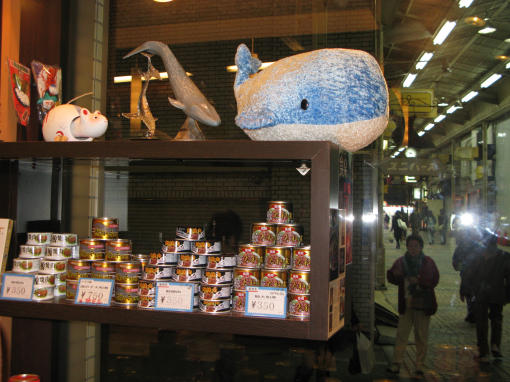
About Japan is an online resource for teachers run by Japan Society's Education Program but really, it's a great learning tool for anyone--like they say, the best way to learn something is to teach it. I just love the range of topics they cover. You can watch survivors of the 1945 bombing of Hiroshima discuss their experiences, paper cranes, and 9/11 and then right after, you can learn about canned whale meat.

Or for those of you who like your knowledge straight up on the rocks with no frills, there's Facts and Details: a comprehensive site with just that.

Tuesday, May 4, 2010

What a Busy Weekend!

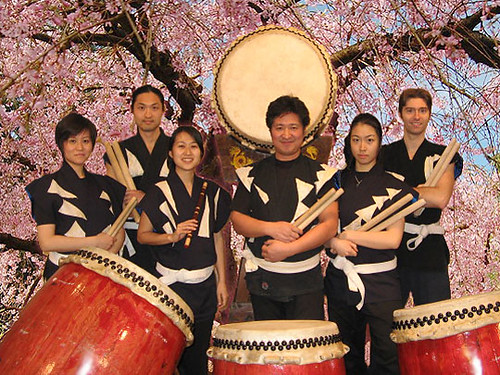
Taiko Masala, courtesy of Brooklyn Botanical Garden
The Brooklyn Botanical Gardens hosted a a phenomenal weekend celebrating Sakura Matsuri and Japanese culture that showcased over 60 events and performances, including Taiko drumming, Okinawan pop, a Samurai drama, sushi-shaped cookies, anime stand-up comedy, and so much more!

Japan Society ran its own booth, which was maintained by some of our diligent staff members. Our payroll manager, Manuel Martinez was pleased to note that many of the adults that accompanied the younger crowd enjoyed stopping at our table, asking questions, and picking up our pamphlets. And Cynthia Sternau, our publications manager, had this to say:

"The lack of cherry blossoms and NYC's usual weekend transportation snafus didn't stop the crowds of garden lovers and Japanophiles from pouring into the BBG for the Sakura Matsuri this past weekend. Japan Society's table was located in the Osborne Garden, right off the Eastern Parkway entrance, under a nice pink tent but a bit too close to the J-Lounge's sound system (Taiko & Tap was really loud!). Our gorgeous Kuniyoshi palm cards featuring four woodblock prints from the current Gallery exhibition were much admired! In fact, compliments were paid to Japan Society's programs by many who stopped by the table, including mentions of a late night at j-CATION and Film's recent "Dangerous Women" series. In fact, it was a whole lot of fun and very good outreach to take Japan Society to Brooklyn for the weekend."


That same Sunday, children and adults celebrated Children's Day (Kodomo no hi) here at Japan Society. There were performances of Japan’s classic children’s stories Peach Boy (Momotaro) and Golden Boy (Kintaro) and also song and dance related to the festival by Theatre Arts Japan – KIDS, directed by Eriko Ogawa. The attendees of this popular event enjoyed traditional snacks and created their own samurai helmets (kabuto) and carp streamers, which are traditional Children’s Day decorations.

If you wandered through Times Square afterwards, you probably ran directly into demonstrators, who were led by Hiroshima Mayor Tadatoshi Akiba and Nagasaki Mayor Tomihisa Taue.

The mayors and visiting atomic-bomb survivors, as well as members of nongovernmental organizations from around the world, held a 2-km march to seek the elimination of nuclear weapons ahead of a major nonproliferation review, reported The Japan Times. Calls for a nuclear-free world were also made at other events in New York, many led by Japanese campaigners who were visiting the city to have their voices heard at the five-year U.N. Nuclear Nonproliferation Treaty Review Conference that started on Monday and will run through May 28.

Thursday, January 21, 2010

Book Review: "The Last Train From Hiroshima" and "Edokko"


The New York Times recently published a fantastic review of Charles Pellegrino's sober and authoritative new book, “The Last Train From Hiroshima.” Here are a few interesting excerpts from the article:

"Mr. Pellegrino, whose many previous books include “Ghosts of the Titanic” (he also served as a scientific consultant to the director James Cameron on his Titanic expeditions and on “Avatar”), relates many stories in this book, not only those of wounded survivors but also of American and Japanese pilots and many others.

He pays particular attention to forensic detail, and provides a slow-motion, almost instant-by-instant explanation of how the atom bomb discharged its fury. There is not a lot that is new here, but “The Last Train From Hiroshima” is a firm, compelling synthesis of earlier memoirs and archival material, as well as of the author’s own interviews and research. This is gleaming, popular wartime history, John Hersey infused with Richard Preston and a fleck of Michael Crichton.

This isn’t a book that wrestles deeply with the moral calculus of the decision to drop the atomic bombs. Mr. Pellegrino doesn’t say whether he agrees with Paul Fussell, who wrote in “Thank God for the Atomic Bomb” that “the degree to which Americans register shock and extraordinary shame about the Hiroshima bomb correlates closely with lack of information about the Pacific war.”

But he certainly studies every kind of fallout and does not neglect the spiritual variety. He writes about one doctor who “recalled that those who survived the atomic bomb were, in general, the people who ignored others crying out in extremis or who stayed away from the flames, even when patients and colleagues shrieked from within them.”

This doctor confessed: “Those of us who stayed where we were, those of us who took refuge in the hills behind the hospital when the fires began to spread and close in, happened to escape alive. In short, those who survived the bomb were, if not merely lucky, in a greater or lesser degree selfish, self-centered — guided by instinct and not by civilization. And we know it, we who have survived.” " 

An excerpt of Mr. Pellegrino's book itself can be found HERE.

On a similar note, here at Japan Society, we recently featured author Isaac Shapiro, who was born to Russian Jewish parents in Tokyo in 1931 and grew up in the shadows of war torn Japan. Mr. Shapiro, who went on to become a prominent Manhattan attorney and president of Japan Society, shared the fascinating tale of his Russian/Jewish/Chinese/Japanese childhood in wartime Japan with us on January 14th.

The press release for that event is on our website, if you're interested in learning more.

Tuesday, December 1, 2009

Leur Existence - Tree Project


THE HORTICULTURAL SOCIETY OF NEW YORK GALLERY

December 9, 2009 - February 12, 2010
Hiroshi Sunari
Leur Existence - Tree Project

Opening Reception
Wednesday, December 9th
6pm to 8:30pm

Over 60 years ago, the city of Hiroshima was decimated by one nuclear bomb. Hibaku trees, those that still live from the time of the atomic bombing, have shown an inspiring ability to persevere. Since 2005, Sunari has been collecting seeds from hibaku trees in Hiroshima and has distributed them to nearly 400 Tree Project participants in 23 countries. Leur Existence – Tree Project will feature a selection of these plants, which have been donated by the participants, as well as photographic and written documentation of the process. Plants will be presented in ceramic elephant-foot pots, designed and created by the artist.

- - -

This is really exciting. We featured the artist’s powerful White Elephant—a reaction to his experience being downtown on the morning of September 11, 2001—in our 2007 exhibition, Making a Home: Japanese Contemporary Artists in New York.